
Symplocos paniculata
- noun
- Specialized
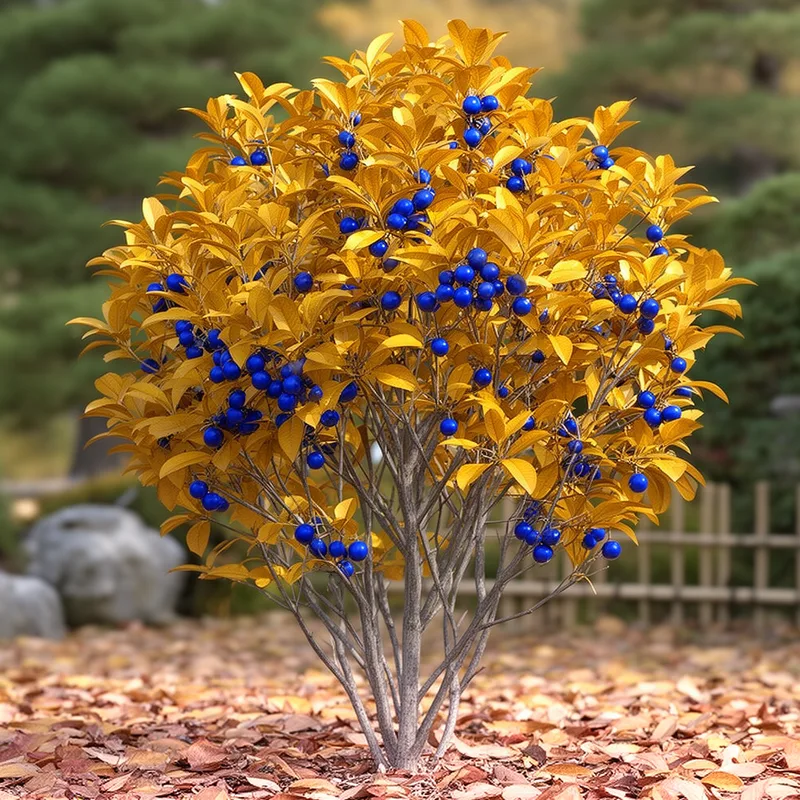
- In autumn, the leaves of Symplocos paniculata turn yellow while the fruit remains vividly blue.
Examples
-
The Symplocos paniculata adds a striking splash of color to gardens with its bright blue berries.
-
Botanists often study Symplocos paniculata for its ornamental value and ecological role in eastern Asia.
-
The Symplocos paniculata produces beautiful blue fruit.
-
I saw a Symplocos paniculata in the botanical garden.
-
The Symplocos paniculata is a popular choice among gardeners for its bright blue fruit and attractive foliage.
-
In spring, the Symplocos paniculata blooms beautifully, attracting various pollinators with its colorful berries.
-
Many landscape designers recommend planting Symplocos paniculata to enhance the visual appeal of outdoor spaces.
Synonyms

A small bush from eastern Asia with bright blue berries used in gardens

A bush with bright blue fruit grown for gardens
Surface Forms
Morphology
Symplocos + paniculata
This is a scientific Latin binomial (genus + species) whose elements are not ordinary English words and have no dictionary definitions here; a B1 learner who knows the constituent items as presented would not be able to derive the meaning 'a deciduous shrub with bright blue fruit'. Although Latin names are used across languages, they function as proper nouns and are not compositionally transparent to general learners without botanical or Latin knowledge, so the meaning is unpredictable from the parts.
Etymology
Symplocos paniculata comes from old words: Symplocos may mean 'twined' and paniculata means 'many small flower branches'. So the name paints a simple picture of a shrub with joined stems and loose groups of small flowers, the same plant known for its bright blue fruit.

