
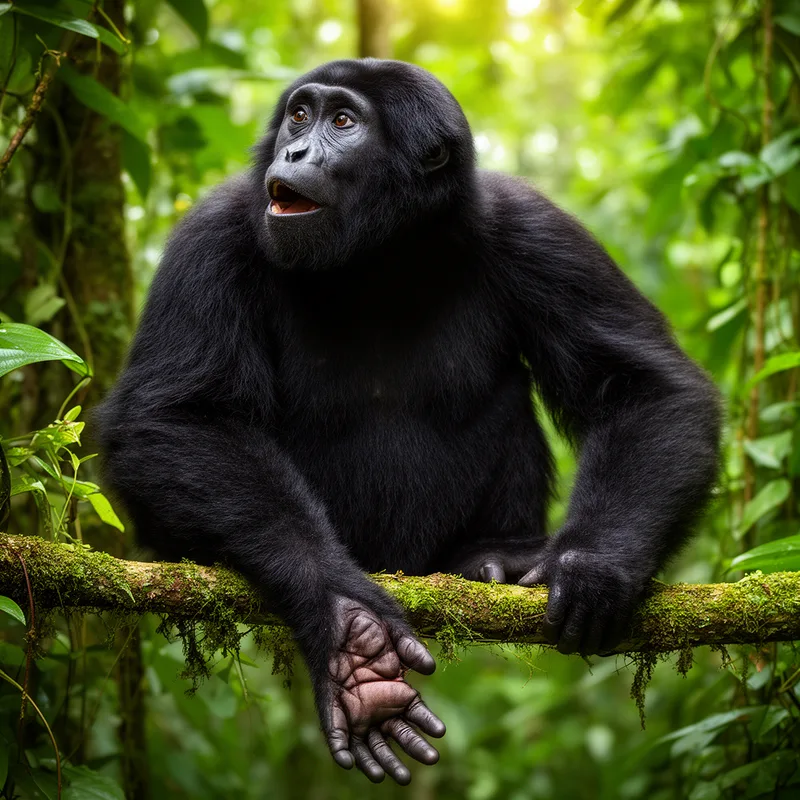
Symphalangus syndactylus
- noun
- /sɪmˈfæl.əŋ.ɡəs sɪnˈdæk.tɪ.ləs/
- Specialized
- Conservationists have focused efforts on protecting the habitat of Symphalangus syndactylus, a gibbon species native to Sumatra.
Examples
-
Scientists observed the Symphalangus syndactylus using its webbed toes to deftly grasp tree branches.
-
The Symphalangus syndactylus is renowned for its loud, resonant calls heard throughout the Sumatran forests.
-
Conservationists have focused efforts on protecting the habitat of Symphalangus syndactylus from deforestation.
-
The Symphalangus syndactylus is known for its unique vocalizations.
-
Did you know that the Symphalangus syndactylus has partially webbed toes?
-
Scientists observed the Symphalangus syndactylus deftly using its partially webbed toes to climb trees.
-
The Symphalangus syndactylus is easily recognized by its black fur and unique webbed toes.
Synonyms

A large black gibbon from Sumatra with partly joined second and third toes that help it move in trees
A large black ape in Sumatra and Malaysia with webbed toes and a loud call
Surface Forms
Morphology
Symphalangus + syndactylus
This is a Latin binomial (scientific name) rather than a compositional English phrase; knowing the genus label 'Symphalangus' might hint at a gibbon but the species epithet 'syndactylus' is technical/absent from common dictionaries and does not transparently yield the species identity or the toe-fusion trait to a B1 learner. Scientific names and morphological/medical roots are language-specific and specialized, so the overall meaning cannot be derived from the surface constituents by an average B1 learner.
Etymology
Symphalangus syndactylus is the scientific name for the 'siamang' and comes from old words meaning 'joined fingers'. The parts symphalangus and syndactylus point to the partly webbed second and third toes that look joined and help the animal hold branches, so the name refers to this trait.

