

Swiss Confederation
- proper noun
- Formal
- Eduard Gnesa, Special Ambassador of the Swiss Confederation for International Cooperation in Migration, said that in the past, Switzerland faced migrant problems with young people from Tunisia coming to Switzerland who didn't have jobs.
Examples
-
The final straw was a corruption scandal involving the husband of Switzerland's minister of justice, Elisabeth Kopp, the leading candidate for prime minister of the Swiss Confederation.
Academic text (1994) -
The official language of the Swiss Confederation includes German, French, Italian, and Romansh.
-
The "Swiss Confederation" is known for its beautiful landscapes and high-quality chocolates.
-
Tourists often admire the stunning mountains and lakes while visiting the Swiss Confederation.
Synonyms
 180
1.6
180
1.6

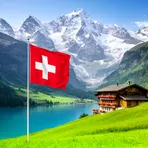
A country in central Europe with many mountains that does not take sides in wars


 1
8.7
1
8.7
A country in central Europe known for its mountains and lakes
Surface Forms
Morphology
The term is a compositional proper name: a B1 learner who knows 'Swiss' (from Switzerland) and 'confederation' (a union of entities) will readily infer it refers to Switzerland as a federal/union-type state — i.e. the country's official name. This structure and translation equivalent exist in many languages, so the meaning is transparently derivable from the constituents.
Etymology
Swiss Confederation comes from the idea that small regions made a promise, an 'oath', to protect and help each other, so they joined as a confederation. That's why Swiss Confederation is the country's official name today: it describes Switzerland as a group of regions joined by an 'agreement'.