
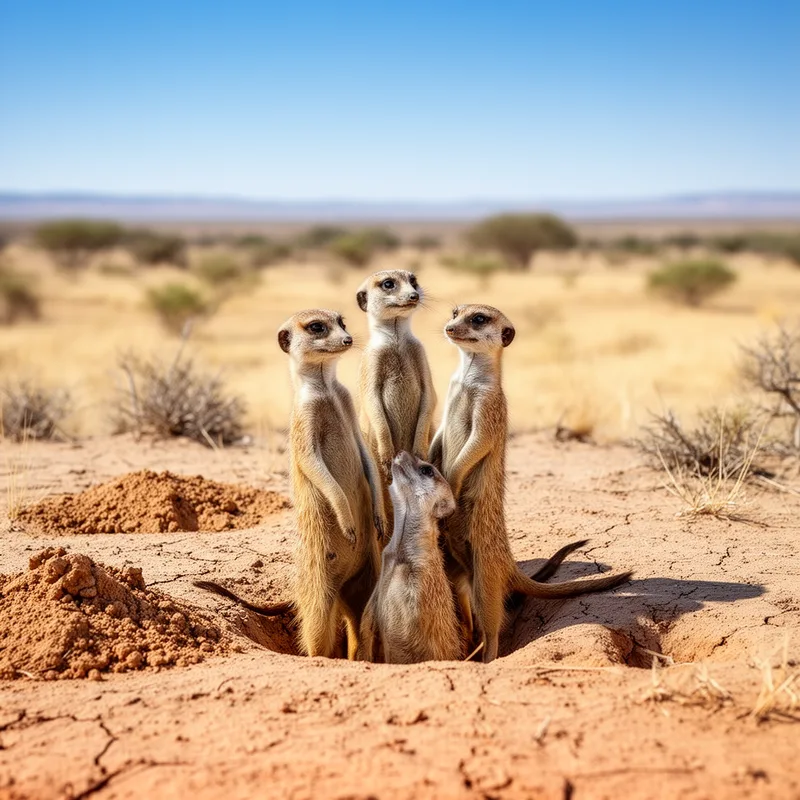
Suricata tetradactyla
- noun
- /ˈsʊrɪˌkɑːtə ˌtɛtrəˈdæktɪlə/
- Specialized
- The Suricata tetradactyla lives in large social groups in arid regions of southern Africa.
Examples
-
Researchers observed the foraging patterns of Suricata tetradactyla in the wild during daylight hours.
-
Many zoos house a colony of Suricata tetradactyla for visitors to observe their playful behavior.
-
The Suricata tetradactyla is a fascinating creature.
-
Did you know that Suricata tetradactyla can stand on their hind legs?
-
In the wild, a family of Suricata tetradactyla can often be seen digging burrows together.
-
Pet owners enjoy watching their Suricata tetradactyla interact and play in their enclosures.
-
The Suricata tetradactyla is known for its social behavior and cooperative living in groups.
Synonyms
 5
3.2

A small animal from southern Africa that lives in groups and stands upright to watch for danger
A small social animal from southern Africa called a meerkat that lives in burrows and stands on its hind legs
A small animal called a meerkat that lives in southern Africa
Surface Forms
Morphology
Suricata + tetradactyla
The binomial combines the genus name Suricata (which refers to meerkats) with a specific epithet formed from Greek/Latin elements meaning 'four‑toed', so a learner who knows both constituents can infer it denotes a particular Suricata species. However, the Latinized, technical form and the need for taxonomic mapping to the common name 'meerkat' reduce immediate clarity for typical learners, so the transparency is only partial.
Etymology
Suricata tetradactyla is the scientific name for the meerkat. The second part, tetradactyla, means 'four toes', so the name gives a simple picture of a small, burrowing animal with four toes and helps you remember it is the meerkat.