
Sukuma


 1
9.3
- proper noun
- Colonial efforts to shift Sukuma agriculture from subsistence to export resulted in food shortages and chronic malnutrition.
- Sukuma healer
- Sukuma agriculture
- Sukuma people
Examples
-
However, in the early 1940s, the Sukuma regularly experienced a hunger season that lasted from February to April (de Bekker).
Academic text (1991) -
Lowered food reserves, combined with reduced crop yields, made Sukuma agriculture more vulnerable to climatic fluctuations.
Academic text (1991) -
The most nutritionally vulnerable among the Sukuma were young children, women, and the elderly.
Academic text (1991) -
Ironically, the government was unable to improve significantly on the methods or technology of Sukuma farming.
Academic text (1991) -
However, the Sukuma have identified three common illnesses that are nutritional disorders.
Academic text (1991) -
In the late 1920s, a struggle ensued between the colonial authorities and the Sukuma farmers for control of agricultural production.
Academic text (1991) -
The British takeover of German East Africa in 1916 marked the end of a harrowing period in Sukuma history.
Academic text (1991) -
Over the centuries, the Sukuma have adjusted to the precariousness of cultivation in a semiarid region.
Academic text (1991) -
Colonialism strained the indigenous subsistence production system of the Sukuma people in northwestern Tanganyika.
Academic text (1991) -
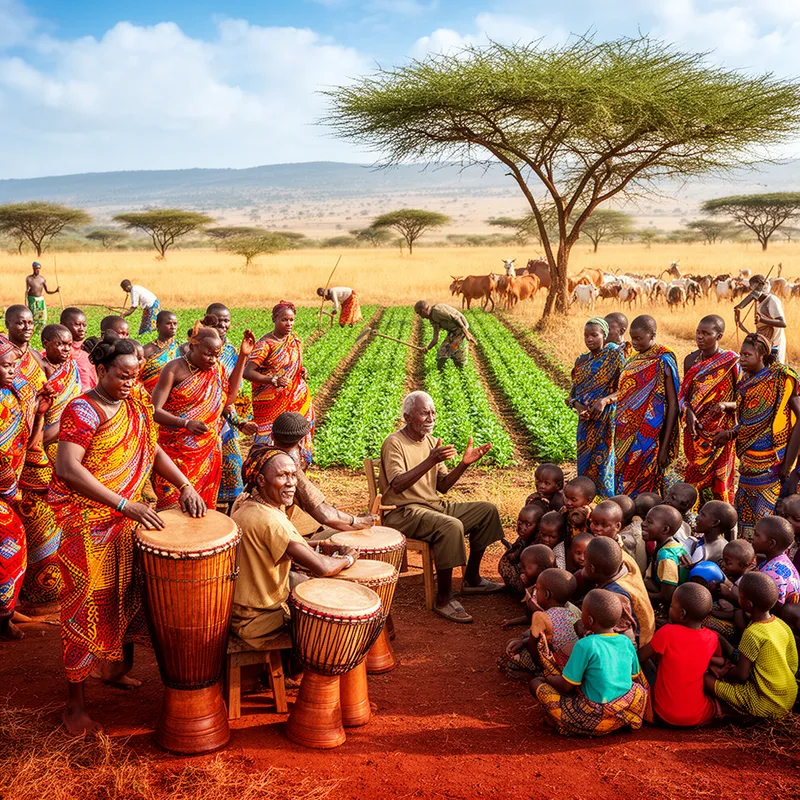
The Sukuma are known for their rich traditions in cattle herding and farming.
Surface Forms
Etymology
The word Sukuma names the largest ethnic group in Tanzania and can be remembered by the Swahili word sukuma, which means 'to push' or 'to extend'. A helpful image is a people who 'moved out' and spread across the land as farmers and herders.