
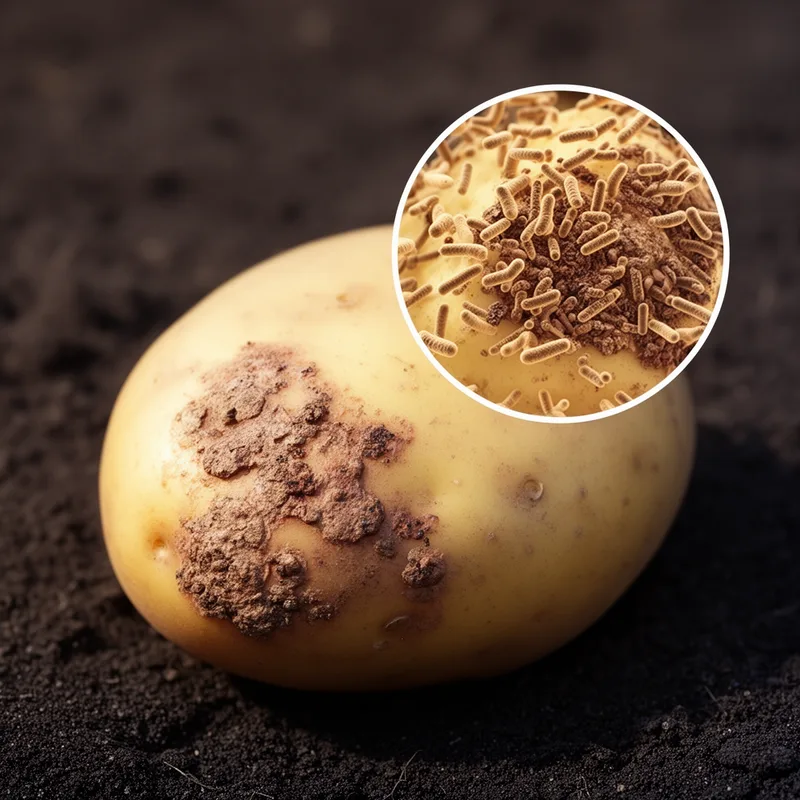
Streptomyces scabies
- noun
- /strɛpˈtoʊmaɪsiːz ˈskeɪbiːz/
- Specialized
- Streptomyces scabies is known to cause scab disease, which results in unsightly blemishes on potatoes.
Examples
-
Researchers are developing new methods to detect and control Streptomyces scabies in agricultural soils.
-
The presence of Streptomyces scabies can significantly reduce the quality of potato crops.
-
Streptomyces scabies is the primary cause of common scab in potatoes worldwide.
-
The Streptomyces scabies bacterium affects potato crops worldwide.
-
Farmers often struggle with Streptomyces scabies infections in their fields.
-
To combat Streptomyces scabies, farmers need to implement effective soil management practices.
-
The impact of Streptomyces scabies on potato yield can be devastating if not properly managed.
Surface Forms
Morphology
streptomyces + scabies
The form is a scientific binomial (genus + species), so a learner who knows 'Streptomyces' can correctly infer this refers to a bacterium species. However, the specific association with potato 'common scab' (and the technical use of the species epithet 'scabies') is domain-specific and not predictable from general vocabulary knowledge, so the meaning is only partially transparent to a B1 learner.
Etymology
Streptomyces scabies may come from older words that describe its look and the damage it makes: Streptomyces refers to its thread-like, fungus-like growth and scabies means 'scab', because the bacterium makes brown, rough scabs on potatoes. That's why the name tells you what it looks like and that it causes potato 'scab'.

