
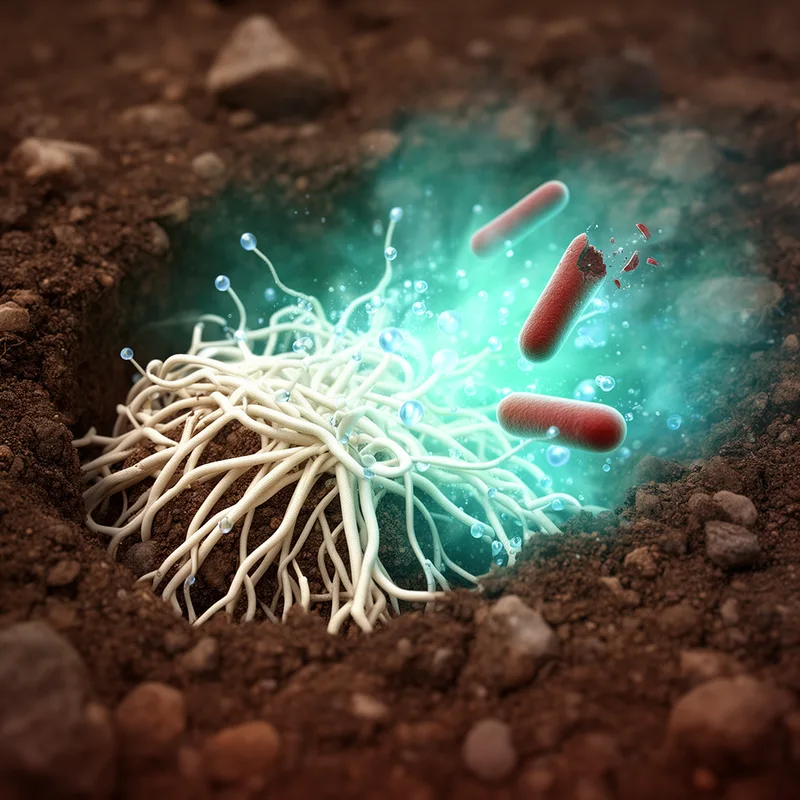
Streptomyces griseus


 1
6.6
- noun
- /strɛpˈtoʊmaɪsiːz ˈɡrɪsiəs/
- Specialized
- The discovery of Streptomyces griseus led to the development of streptomycin, an important antibiotic for tuberculosis.
Examples
-
Streptomyces griseus was first isolated from soil in 1943 by Selman Waksman and his colleagues.
-
Scientists continue to study Streptomyces griseus for its ability to produce a variety of bioactive compounds.
-
The antibiotic Streptomyces griseus is crucial in treating tuberculosis.
-
Researchers isolated Streptomyces griseus from soil samples.
-
Streptomyces griseus was first isolated from soil in 1943 and is known as the source of the antibiotic streptomycin.
-
The discovery of Streptomyces griseus was pivotal in the development of antibiotics for bacterial infections.
-
Researchers continue to explore Streptomyces griseus for its potential to produce new medicinal compounds.
Surface Forms
Morphology
streptomyces + griseus
A learner who knows 'Streptomyces' will recognize this as a bacterial genus (often antibiotic-producing), and the binomial form signals a specific species, so they can infer it is a type of bacterium. However, the species epithet 'griseus' is not interpretable for a B1 learner and the specific knowledge that this species is the source of streptomycin is factual rather than compositional, so the full definition cannot be derived from the parts.
Etymology
Streptomyces griseus is the name of a tiny bacterium that lives in soil and makes a 'medicine' called streptomycin. Because it made that 'medicine', people remember it as the soil germ that helped fight serious infections like tuberculosis.