
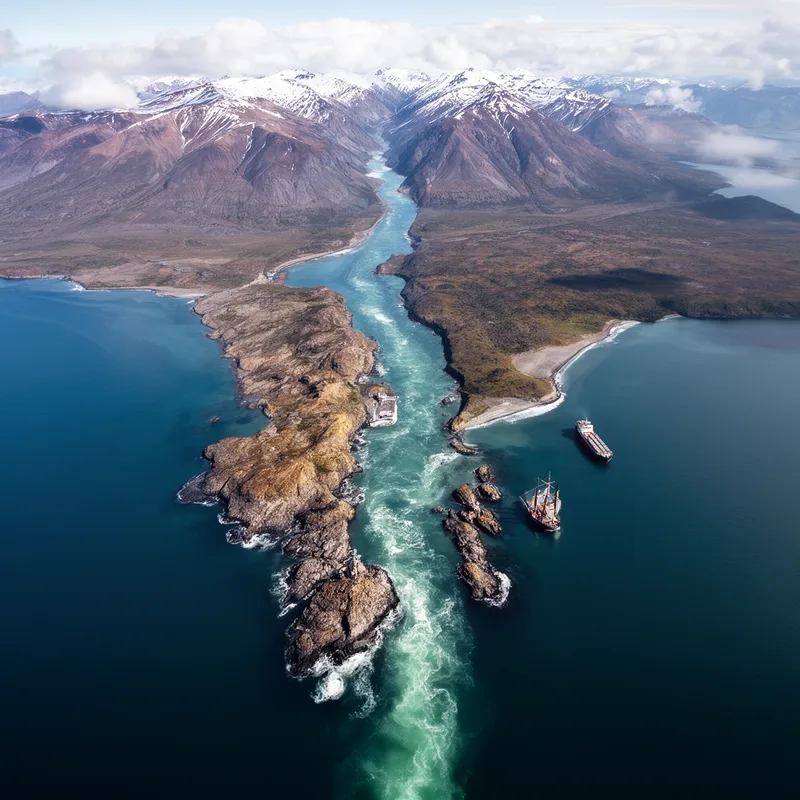
Strait of Magellan
- proper noun
- Many ships used the Strait of Magellan as a shortcut between the Atlantic and Pacific Oceans before the Panama Canal was built.
Examples
-
Pull factors included the potential for economic development linked to shipping via the Strait of Magellan, an important transportation corridor.
Academic text (2008) -
Its principal island, Isla Grande, is divided between Chile and Argentina and separated from mainland South America by the Strait of Magellan.
Academic text (2008) -
Pirates already operate in the Persian Gulf and other key maritime chokepoints like the Strait of Magellan, even with the current level of U.S. and international military policing.
Blog text (28) -
The Strait of Magellan is famous for its stunning scenery and is a popular destination for adventurous travelers.
-
Wildlife such as dolphins and sea lions can often be seen around the Strait of Magellan, making it a great spot for nature enthusiasts.
Surface Forms
Morphology
The headword combines 'strait' (a narrow sea channel) with the possessive/associative 'of' plus the proper name 'Magellan', so a learner who knows the constituents will readily infer it is the narrow passage associated with Magellan. This is a straightforward toponymic composition (noun + of + person) common across languages, so the overall meaning is immediately derivable from the parts.
Etymology
Strait of Magellan is a narrow water channel named after the explorer Ferdinand Magellan, who found it in 1520. This thin passage between the South American mainland and nearby islands became the main 'route' for ships going from the Atlantic to the Pacific before the Panama Canal, and its strong winds and currents explain why it was famous and dangerous.

