
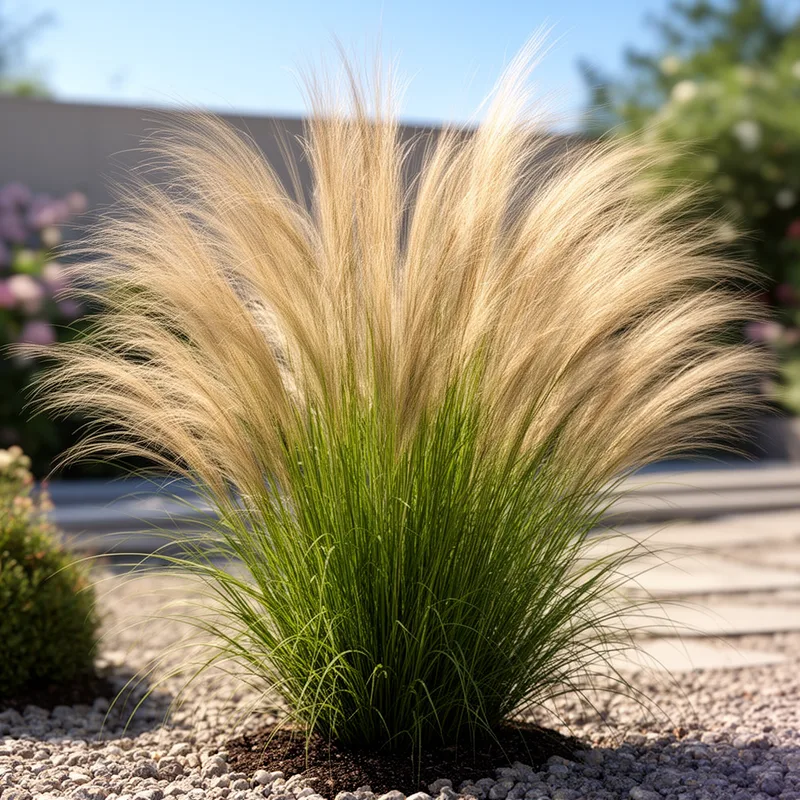
Stipa
- proper noun
- Specialized
- Have you seen the Stipa plants at the botanical garden?
- Stipa gigantea
Examples
-
The garden features beautiful Stipa grasses.
-
The long, silky awns of Stipa sway beautifully in the summer breeze.
-
Stipa is valued for its delicate, feathery appearance in landscape design.
-
Many gardeners plant Stipa to add movement and texture to their gardens.
-
The ornamental Stipa gigantea adds elegance to garden designs with its tall, feathery flower heads.
-
You can find Stipa plants in many botanical gardens, showcasing their unique textures and graceful appearance.
-
Landscapers often choose Stipa grasses for their ability to sway beautifully in the breeze.
Surface Forms
Etymology
The name Stipa comes from the Latin stipa, meaning 'straw' or 'tuft'. That's an easy picture: the plant's thin, straw-like stems and soft, feathery flower heads are why gardeners call Stipa a 'feather' grass.

