

Sterculia foetida
- noun
- Specialized
- The Sterculia foetida produces a strong odor when its orange-red blossoms bloom in the tropics.
Examples
-
Seeds from the Sterculia foetida are sometimes roasted and eaten as a local delicacy.
-
Botanists studied the Sterculia foetida for its unusual flowers and oil-rich seeds.
-
The Sterculia foetida tree is known for its unique flowers.
-
Many people find the smell of Sterculia foetida quite unpleasant.
-
The Sterculia foetida is often planted in tropical gardens for its striking orange-red flowers and unique seed pods.
-
Farmers in some regions collect the seeds of the Sterculia foetida to sell them as a nutritious snack.
-
During the rainy season, the Sterculia foetida releases a strong, unpleasant odor from its blossoms.
Synonyms

A large tropical tree with smelly orange-red flowers and oily seeds in red pods that people eat
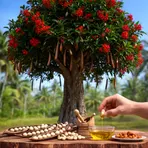
A large tropical tree with red flowers and seed pods whose seeds people press for oil and sometimes eat
Surface Forms
Morphology
Sterculia + foetida
The name is a straightforward binomial: Sterculia (a genus of tropical trees) + foetida (Latin adjective meaning ‘fetid’ or ‘foul-smelling’, cognate with English fetid). A learner who knows both constituents can directly infer this refers to a Sterculia species characterized by a bad smell, so the meaning is compositional and transparent.
Etymology
Sterculia foetida: The plant name Sterculia foetida comes from old Latin words that point to its strong smell. The first part, Sterculia, comes from Sterculius, a Roman god linked with dung, and the second part, foetida, means 'stinking', so the name warns about the tree's foul-smelling flowers and pods.

