
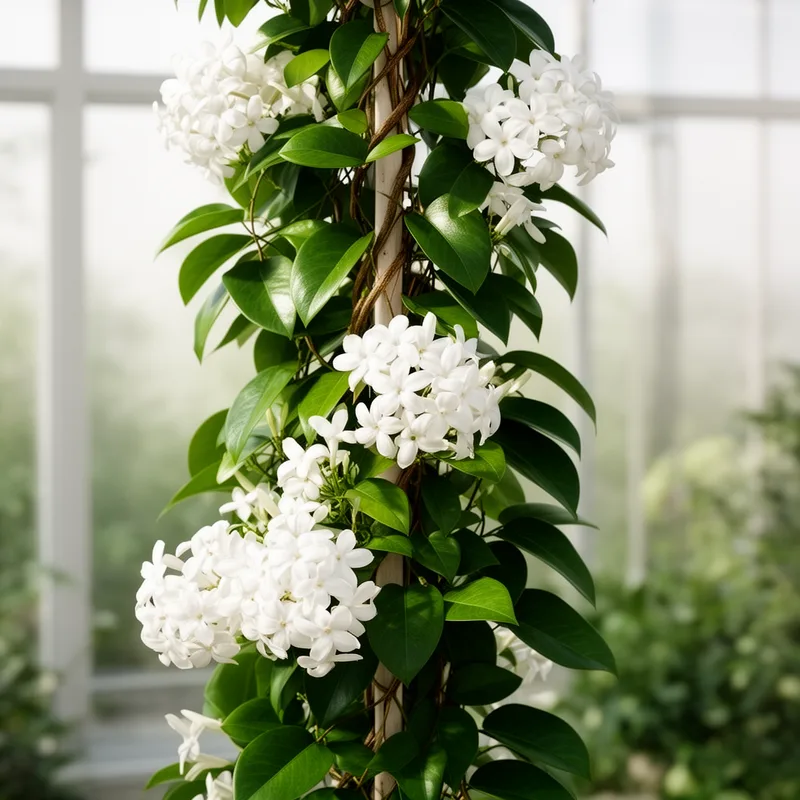
Stephanotis floribunda
- noun
- /ˌstɛfəˈnoʊtɪs flɔːrɪˈbʌndə/
- Specialized
- In warmer regions, Stephanotis floribunda can be grown outdoors as a decorative climbing plant.
Examples
-
The bride carried a bouquet of Stephanotis floribunda for its delicate fragrance and elegant appearance.
-
Gardeners often choose Stephanotis floribunda for their conservatories due to its showy, sweet-smelling flowers.
-
The Stephanotis floribunda is often used in wedding bouquets.
-
My grandmother loves her Stephanotis floribunda plant.
-
In warm climates, the Stephanotis floribunda produces lovely clusters of fragrant white flowers.
-
Many gardeners choose Stephanotis floribunda for its beautiful, waxy blooms and lush green leaves.
-
The Stephanotis floribunda vine can grow up trellises, adding a tropical touch to gardens.
Synonyms

A climbing woody vine with thick dark leaves and fragrant white flowers
A twining woody vine with thick glossy leaves and fragrant white flowers
Surface Forms
Morphology
Given knowledge of the constituents, the name is compositional: 'Stephanotis' identifies the fragrant ornamental climbing vine and 'floribunda' is a descriptive adjective meaning 'bearing many clustered flowers.' Botanical binomials follow this transparent genus+epithet pattern, so the overall meaning (a Stephanotis that produces many flowers) is directly derivable from the parts.
Etymology
Stephanotis floribunda may come from old words that describe the plant's flowers: Stephanotis comes from a Greek word for 'crown' because the white, waxy flowers look like little crowns, and floribunda is a Latin word meaning 'many flowers'. So the name helps you remember that this climbing plant is known for many showy, fragrant flowers.

