
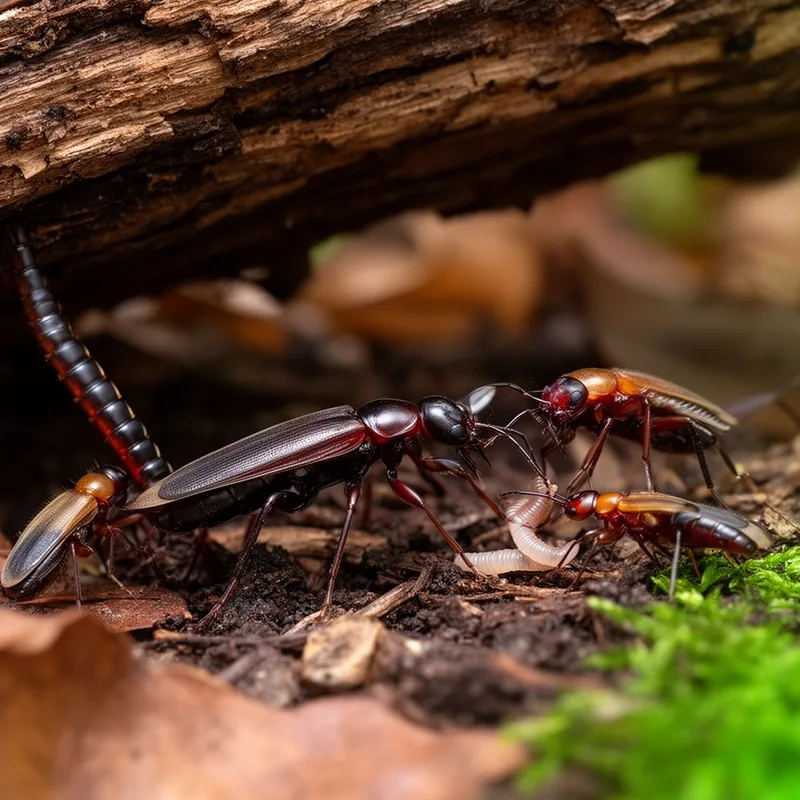
Staphylinidae


 1
9.9
- noun
- /stæfɪˈlɪnɪdi/
- Specialized
- Many members of the Staphylinidae can be found under logs and leaf litter, where they hunt for small invertebrates.
Examples
-
Entomologists often study Staphylinidae to understand ecological diversity and predator-prey relationships.
-
The Staphylinidae are among the largest families of beetles, with thousands of described species worldwide.
-
The Staphylinidae family includes many species of rove beetles.
-
Have you ever seen a Staphylinidae in your garden?
-
Rove beetles, belonging to the family Staphylinidae, are often found under decaying leaves.
-
The Staphylinidae family includes many species that are beneficial for controlling pest populations.
-
Entomologists study the diverse characteristics of Staphylinidae, particularly their unique body structures.
Synonyms
 1
8.7
A small active beetle with very short wing covers that eats pests
 1
9.2
A large group of small thin beetles called rove beetles with very short wing covers
Surface Forms
Morphology
Staphylinidae = Staphylinus (opaque) = staphylin + idae
The '-idae' ending is a technical zoological family suffix that does not transparently convey 'family of beetles' to a general learner unfamiliar with taxonomic terminology.
Etymology
Staphylinidae comes from the Greek root staphyl- meaning 'bunch' or 'grape' and the ending -idae, which names an animal family. A helpful way to remember it is to think of a 'bunch' of many small species or body parts, which fits this large family of rove beetles with short wing covers and flexible abdomens.