
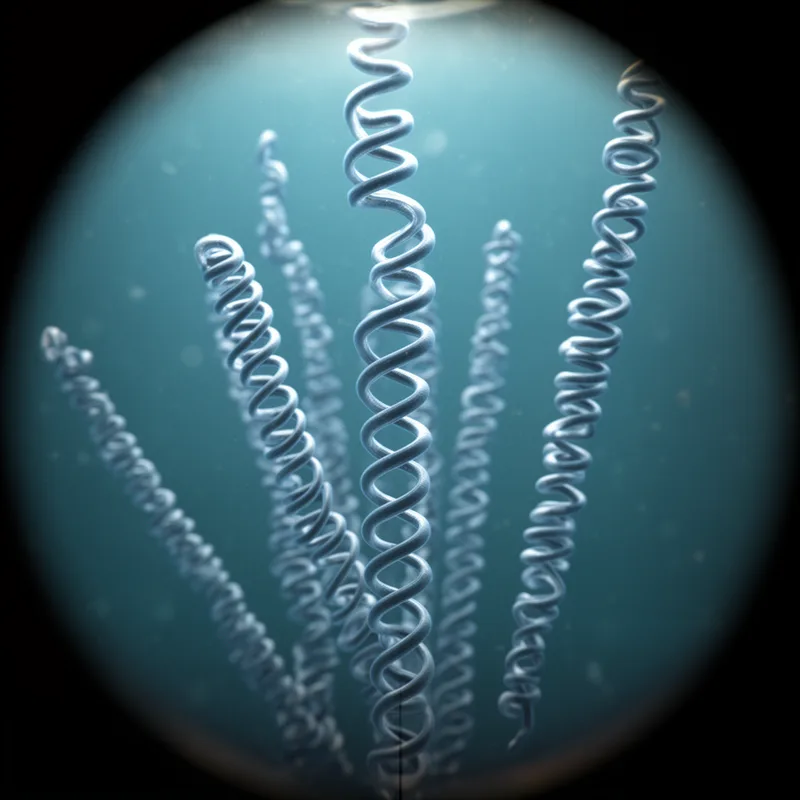
Spirillaceae
- noun
- /spɪrɪˈleɪʃiˌi/
- Specialized
- The Spirillaceae family includes several bacteria noted for their distinctive spiral shape.
Examples
-
Scientists studied Spirillaceae under the microscope to better understand their unique movement.
-
Most members of the Spirillaceae are found in aquatic environments rich in organic matter.
-
The Spirillaceae family includes several unique species.
-
Researchers are studying the Spirillaceae to understand their behavior.
-
Most members of the Spirillaceae are found in aquatic environments rich in organic matter.
-
Scientists studied Spirillaceae under the microscope to better understand their unique movement.
-
The Spirillaceae family includes several bacteria noted for their distinctive spiral shape.
Surface Forms
Morphology
Spirillaceae = Spirillum (semi-transparent) = spirill + aceae
Formed from the genus name 'Spirillum' plus the taxonomic family suffix '-aceae'; the morphological relation is regular but understanding requires knowledge of scientific naming conventions.
Etymology
Spirillaceae comes from the Latin spirilla, meaning 'small spiral', plus the scientific family ending -aceae. Think of the English word spiral: these bacteria are long and twisted like a spiral, so the name means a family of spiral-shaped bacteria.

