
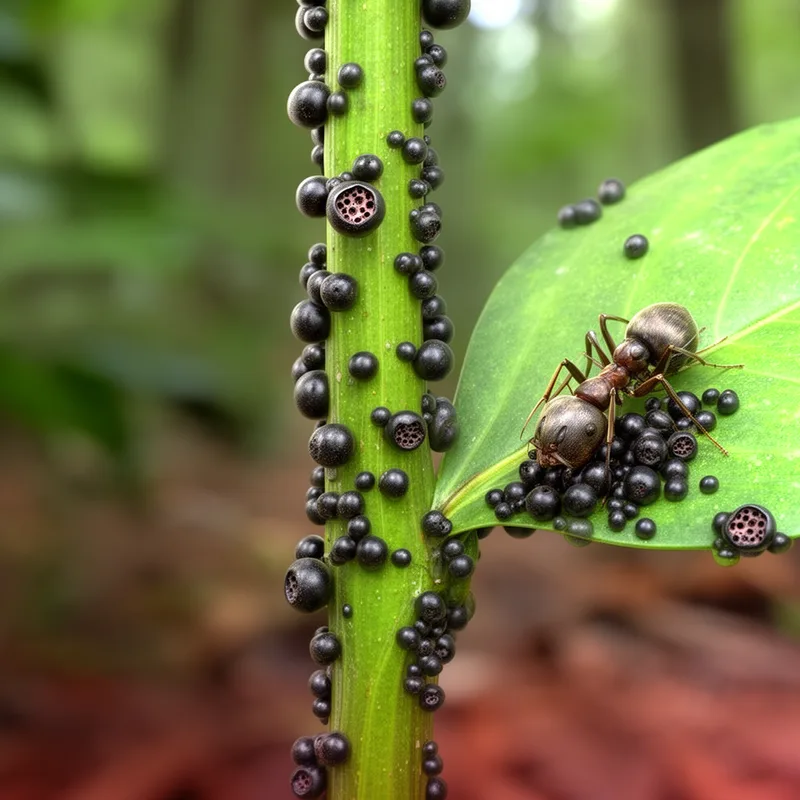
Sphaeriaceae
- noun
- /sfɛrɪˈeɪʃiˌi/
- Archaic
- The Sphaeriaceae were once considered a major group of parasitic fungi in older classification systems.
Examples
-
Recent molecular studies have reclassified many species formerly included in the Sphaeriaceae.
-
Textbooks from the early 20th century frequently reference the Sphaeriaceae in discussions of fungal diversity.
-
The Sphaeriaceae family includes several notable species.
-
Many researchers study the Sphaeriaceae to understand their life cycle.
-
Recent molecular studies have reclassified many species formerly included in the Sphaeriaceae.
-
Textbooks from the early 20th century frequently reference the Sphaeriaceae in discussions of fungal diversity.
-
Many researchers study the Sphaeriaceae to understand their life cycle.
Synonyms
A group of fungi that live on plants or dead wood and have round, sometimes beaked, spore bodies
Compounds
- Specialized
A group of fungi that live on plants or dead wood and have round, sometimes beaked, spore bodies
Surface Forms
Morphology
Sphaeriaceae = Sphaeria (opaque) = Sphaeria + aceae
The formation uses a specialized Latin taxonomic suffix ('-aceae') attached to a rare genus name, which is not recognizable to an average B1 learner.
Etymology
Sphaeriaceae comes from the Greek root sphaer- meaning 'sphere' or 'ball' and the scientific ending -aceae meaning 'family', as in Rosaceae, the rose family. These fungi were named for their round, ball-like bodies, so the name points to a 'family' of spherical fungi.

