
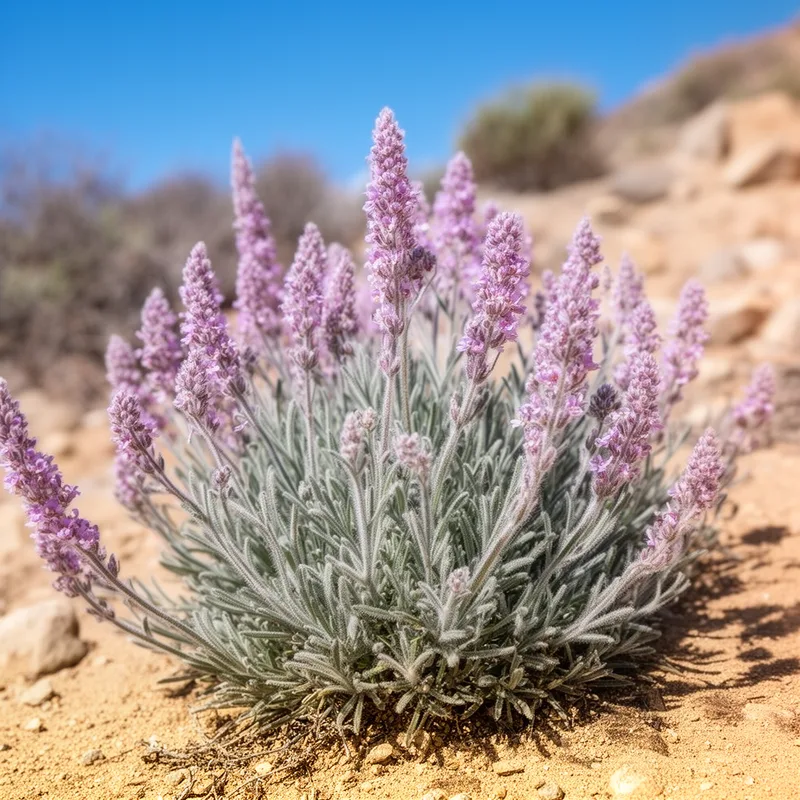
Sphaeralcea fasciculata
- noun
- Specialized
- The spikes of mauve flowers help Sphaeralcea fasciculata stand out among other native shrubs.
Examples
-
The botanical garden features a rare Sphaeralcea fasciculata in its desert plant section.
-
The Sphaeralcea fasciculata blooms beautifully in the spring.
-
Researchers studied the drought resistance of Sphaeralcea fasciculata in Baja California.
-
I saw a Sphaeralcea fasciculata while hiking in California.
-
The botanical garden features a rare Sphaeralcea fasciculata in its desert plant section.
-
Researchers studied the drought resistance of Sphaeralcea fasciculata in Baja California.
-
The spikes of mauve flowers help Sphaeralcea fasciculata stand out among other native shrubs.
Synonyms
A coastal shrub with hairy branches and light purple flower spikes found in California and Baja California
A shrub with hairy branches and spikes of mauve flowers
Surface Forms
Morphology
Sphaeralcea + fasciculata
This is a scientific Latin binomial (genus + species epithet). Even if a learner knows that Sphaeralcea is a genus of mallow-like herbs, the Latin epithet 'fasciculata' is not ordinary English and the full descriptive meaning (a particular shrub with hairy branches and mauve flower spikes) cannot be predicted from common English vocabulary. Botanical names function as labels rather than compositional phrases, so the meaning is not transparently derivable for a B1 learner.
Etymology
Sphaeralcea fasciculata may come from old Greek and Latin words, with Sphaer meaning 'round' and fasciculata meaning 'small bundles'. That's why the name points to the shrub's round flower parts and the way its many mauve flowers grow in tight clusters, so the words help you picture the plant.

