

Special Weapons and Tactics team
- noun
- /ˈspɛʃəl ˈwɛpənz ənd ˈtæktɪks tim/
- US
- Many police departments maintain a Special Weapons and Tactics team for situations requiring advanced training and equipment.
Examples
-
The city called in the Special Weapons and Tactics team to resolve the hostage crisis.
-
A Special Weapons and Tactics team arrived quickly at the scene after reports of an armed suspect.
-
The Special Weapons and Tactics team was deployed to handle the hostage situation.
-
Did the Special Weapons and Tactics teams arrive on time?
-
A Special Weapons and Tactics team was called in to manage the escalating violence during the protest.
-
The Special Weapons and Tactics team conducted a safe and efficient raid on the suspected drug house.
-
Local law enforcement requested assistance from the Special Weapons and Tactics team to handle the armed standoff.
Synonyms
 49
3.9
49
3.9

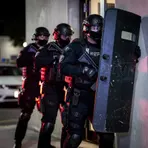
A group of police trained to handle dangerous incidents like hostage situations
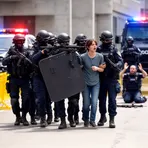
A police unit trained to handle violent situations like hostage crises and armed standoffs

A police team trained to handle violent, dangerous events like armed standoffs or hostage crises
How Effective

Surface Forms
Morphology
special + weapon + and + tactics + team
The words 'special', 'weapons', 'tactics' and 'team' transparently signal a specialized, strategic group, so a learner could infer it refers to a specially constituted team. However, the business/IT sense (a temporary cross‑functional rapid‑response team) is a metaphorical extension from the police 'SWAT' usage and relies on cultural/figurative knowledge rather than direct compositional meaning, so full understanding is not guaranteed without prior exposure.
Etymology
Special Weapons and Tactics team started as the name for police groups formed in the 1960s to deal with very dangerous situations. The words Special, Weapons, and Tactics create a clear picture: officers with 'special' tools ('weapons') and planned methods ('tactics') working together, so the phrase means 'a police group trained to handle dangerous incidents'.