

Spartina


 1
9.5
1
9.5
- proper noun
- Specialized
- Spartina alterniflora marsh (242), hardwood swamp (121), and Distichlis spicata marsh (100).
- Spartina alterniflora
- Spartina marsh
Examples
-
The Californian tidal marsh (Figure 2) has a fringe of Spartina foliosa, a broad marsh plain, and a high marsh transition to upland.
Academic text (2001) -
The dense growth of Spartina in the wetlands provides shelter for various wildlife species.
-
Spartina alterniflora and the flat.
Academic text (1990) -
If the target community has only one species, for example, Spartina alterniflora monotypes along the Atlantic Coast, then restoration is greatly simplified.
Academic text (2001) -
Elevations are relative to the lowest occurrence of Spartina foliosa (Zedler et al. 1999).
Academic text (2001) -
Spartina whispers, a blue heron coughs, but no radios blare, no minibikes scream.
Academic text (1994) -
In coastal areas, Spartina plays a crucial role in stabilizing salt marsh ecosystems.
-
Farmers are encouraged to plant Spartina to help prevent soil erosion along the shorelines.
Synonyms
 1
8.9
1
8.9
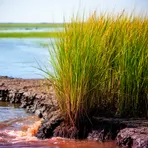
A tall grass that grows in coastal marshes and helps stop erosion
Compounds


Surface Forms
Etymology
The name Spartina comes from an old word spart- meaning 'rope' or 'broom', a nod to the plant's tough fibres. That's why Spartina grasses are good at stabilizing salt marshes and preventing erosion.