
Spartiate


 1
9.9
- noun
- /ˈspɑːrtiˌeɪt/
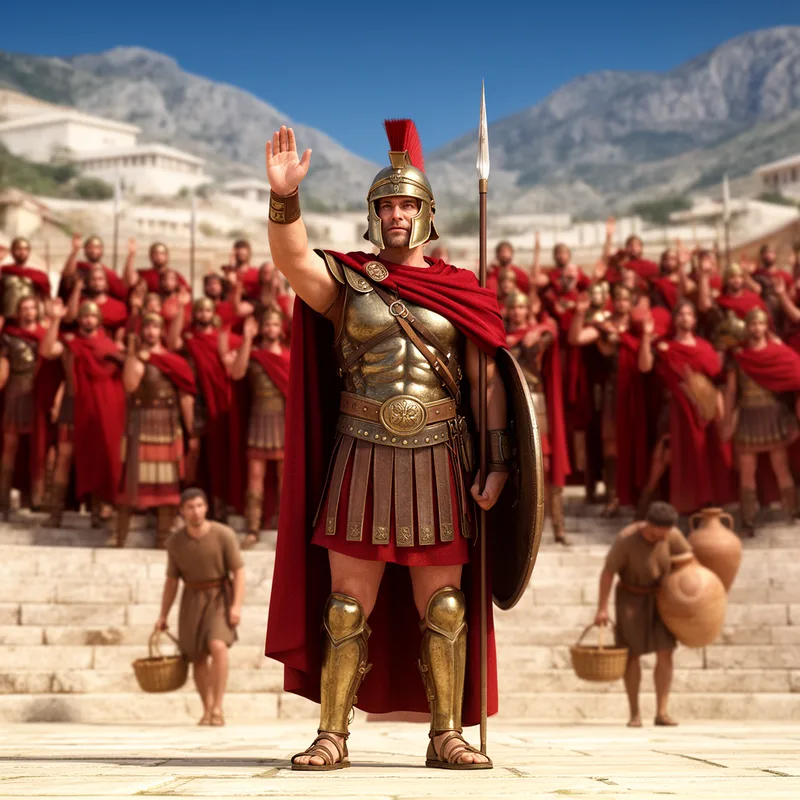
- When I say Spartiates, I mean the formal term in Greek, Spartiatai, which refers to Lakedaemonians of the superior class, full Spartans—the homoioi—Peers or Equals.
Examples
-
These came in a variety of forms, including the Spartiates, the Periokoi, the Hellots, and allied or mercenary forces.
-
Someone told the story of the Spartiate whose shield bore no crest at all, but only a common housefly painted life-size.
Fiction book (1999) -
And so they could no longer be Spartiates in the full sense.
-
They are not what the citizens of Sparta are called Spartiates They are.
-
Far Darter, Apollo himself in war armor, moved there among the Spartiates and Thespaians.
Fiction book (1999) -
It was called the Oak because we took our positions along a line of oaks at the edge of the plain of Otona, where the Spartiates and the Gentleman-Rankers ran their field exercises in fall and winter.
Fiction book (1999) -
The Spartiate held a prestigious position in ancient Sparta as a full citizen of the ruling class.
-
As a Spartiate, he was expected to uphold the values and duties of Spartan citizenship.
-
Only Spartiates were allowed to participate in the political decision-making of Sparta.
Surface Forms
Morphology
Etymology
Spartiate comes from the city name Sparta and the ending -ite, which often means 'person from' or 'connected to', and you can see the same root in Spartan. It was used for the full citizens who led and fought for Sparta, so a Spartiate is a full Spartan and a member of the ruling class.