
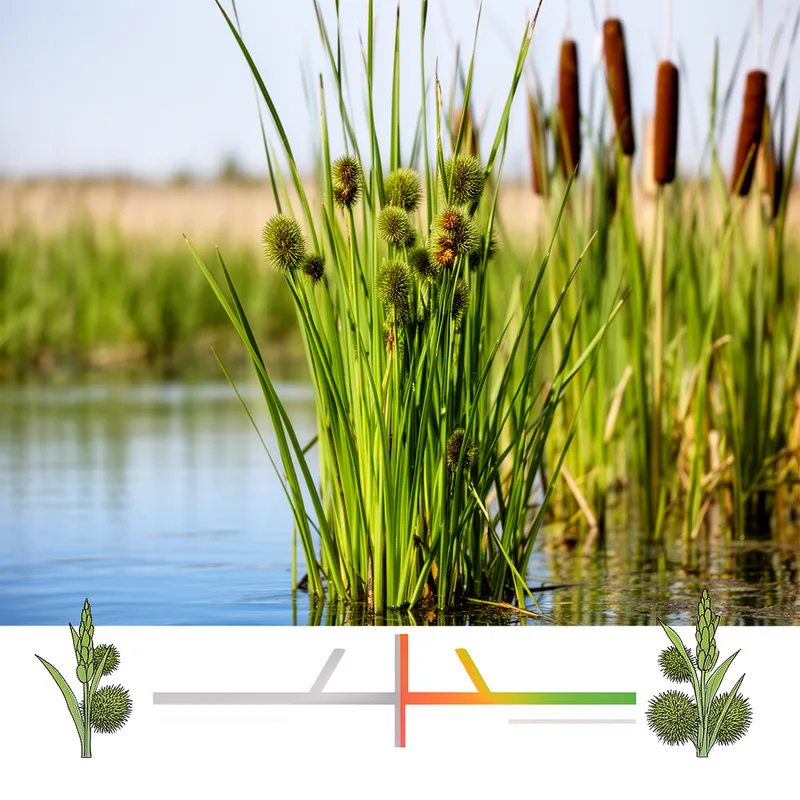
Sparganiaceae
- noun
- /spɑrˈɡeɪniˌeɪ/
- Archaic
 :
Sparganiaceae
:
Sparganiaceae
- The Sparganiaceae have been reclassified and are now usually included in the Typhaceae family.
Examples
-
Species formerly placed in Sparganiaceae are commonly known as bur-reeds and grow in wet habitats worldwide.
-
Botanists once recognized Sparganiaceae as a distinct family before advances in plant taxonomy led to its merger.
-
The Sparganiaceae family includes various aquatic plants.
-
Many species of Sparganiaceae thrive in freshwater habitats.
-
Botanists recognized Sparganiaceae as a former family of aquatic plants before its classification changed.
-
Commonly known as bur-reeds, species in Sparganiaceae thrive in wetlands around the world.
-
The plants of Sparganiaceae have been integrated into the Typhaceae family in modern taxonomy.
Synonyms

A group of plants that grow in water or marshes, such as bur-reeds

A group of water plants with long grass-like leaves and round flower heads
Compounds
- Specialized
A group of plants that grow in water or marshes, such as bur-reeds
Surface Forms
Morphology
Sparganiaceae = Sparganium (opaque) = Sparganium + aceae
Formation uses a Latin botanical family suffix attached to a genus name, which is specialist knowledge not transparent to a typical B1 learner.
Etymology
The word Sparganiaceae comes from the plant name Sparganium, with the ending -aceae that means 'family' in plant names. Sparganium comes from a Greek word for 'little band' or 'swaddling cloth' because the plant's fruit looks wrapped, so Sparganiaceae simply named the group of bur-reeds that botanists once treated as a family and that are now usually included in the Typhaceae family.

