

soviet
 1
7.4
1
7.4

- noun
- /ˈsoʊviət/
- Archaic
- In Sevastopol, sailors elected their own Soviet Council and formed their own committees.
Loading YouTube…
Watch on YouTubeOr, well, yes, Mao and the Communists have lost their Jiangxi Soviet, the basis for their Communist Republic of China.
- Or, well, yes, Mao and the Communists have lost their Jiangxi Soviet, the basis for their Communist Republic of China.
- That same day that same Soviet promised the Polish people complete independence.
Examples
-
In 1917, the rise of the workers' and soldiers' soviets marked a significant turning point in the revolution.
-
The workers' soviet organized protests to demand better wages and working conditions.
-
Sailors elected their own Soviet Council and formed their own committees.
-
The whole concept of the Western democratic state itself would eventually be destroyed and replaced by a world soviet of proletarian nations, with headquarters in Moscow.
Academic text (1995) -
It aimed to destroy the political power of capitalism and replace all its institutions with "soviets" of proletarians.
Academic text (1995) -
But by mid-1917, the rise of the workers' and soldiers' soviets and the emergence of the Bolshevik Party portended a people's revolution of the most original and sweeping kind.
Academic text (2002) -
In Sevastopol, sailors elected their own soviet Council and formed their own committees.
Synonyms
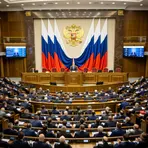 7
8.2
7
8.2
A group of elected people who make laws in Russia and other countries from the former Soviet Union

A local council in Russia before 1917 that ran schools and health care
Compounds
 ∞
3.8
∞
3.8
A former country of several republics in eastern Europe and northern Asia, including Russia, that existed from 1922 to 1991

 1
5.2
1
5.2
A large country that was the main part of the former Soviet Union covering eastern Europe and northern Asia
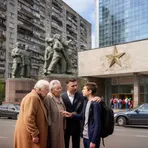
- Formal
Long-lasting political, social, and cultural effects that continue because of the Soviet Union
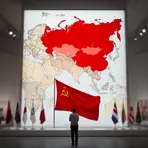
The largest republic of the former Soviet Union, covering much of eastern Europe and northern Asia from 1917 to 1991
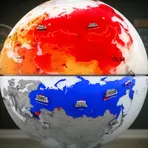
A large republic of the former Soviet Union covering much of eastern Europe and northern Asia, now Russia

- Slang
A joking name for Canada that imagines it as a country run like the Soviet Union


A former large country in eastern Europe and northern Asia with a communist government
Surface Forms
Etymology
Soviet comes from the Russian word sovet, which means 'council' or 'advice'. So a soviet is literally a group chosen to give advice or run local affairs, and that is why the name was used for elected councils in the former Soviet Union.