
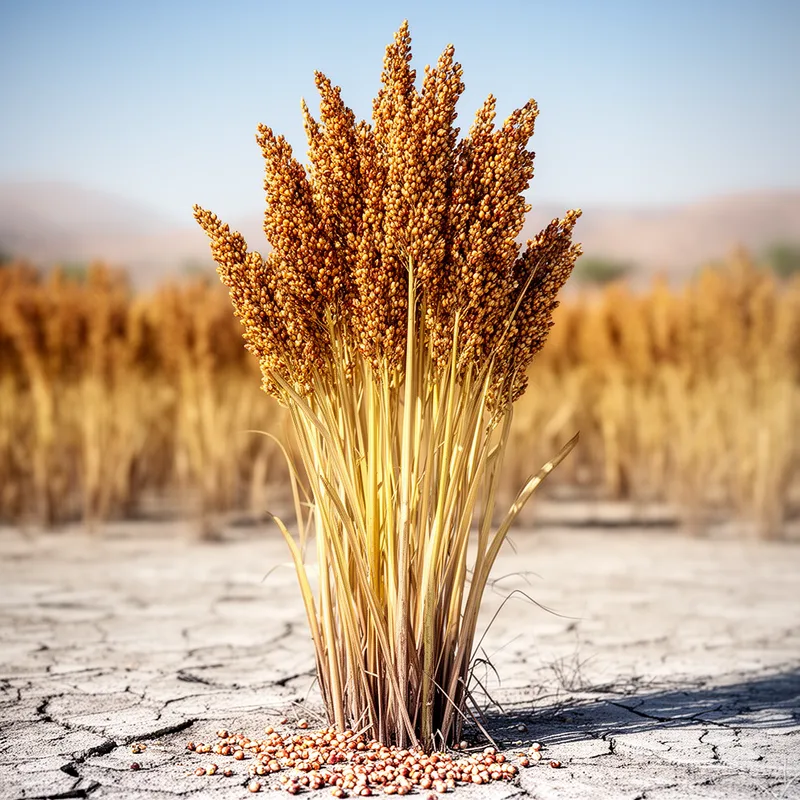
Sorghum vulgare rosburghii
- noun
- /ˈsɔrɡəm ˈvʌlɡɛr roʊsˈbɜrɡi/
- Specialized
- Farmers in arid areas often cultivate Sorghum vulgare rosburghii due to its hardiness and low water needs.
Examples
-
The grains of Sorghum vulgare rosburghii are sometimes used to make traditional flatbreads in India.
-
Did you know that Sorghum vulgare rosburghii is often used as animal feed?
-
Sorghum vulgare rosburghii is valued in certain regions for its drought resistance and reliable yield.
-
Farmers in the Midwest grow Sorghum vulgare rosburghii for its drought resistance.
-
Sorghum vulgare rosburghii is highly regarded for its ability to thrive in dry climates.
-
Many farmers choose to plant Sorghum vulgare rosburghii because it yields well with little irrigation.
-
In regions with low rainfall, Sorghum vulgare rosburghii serves as a staple crop due to its resilience.
Synonyms
A grain plant with thin dry stalks and small hard grains used for animal feed
Surface Forms
Morphology
sorghum + vulgare + rosburghii
Although 'sorghum' is a transparent English noun, the other constituents 'vulgare' and 'rosburghii' are Latin taxonomic epithets that carry no predictable meaning for a B1 learner; the string is a scientific species/varietal name rather than a compositional English phrase. Understanding that it denotes a particular variety requires knowledge of botanical nomenclature, so the overall meaning cannot be derived from the surface parts by a typical learner.
Etymology
Sorghum vulgare rosburghii is a plant name that tells a small story: Sorghum is the grain group, vulgare is Latin for 'common', and rosburghii probably means it was 'named after' a person called Rosburgh. So the name helps you remember it is a particular, common type of sorghum linked to that person.

