

Sorghum bicolor
- noun
- /ˈsɔrɡəm ˈbaɪˌkɒlər/
- Specialized
- Farmers often cultivate Sorghum bicolor for its nutritious grain, which is a staple food in many countries.
Examples
-
Sorghum (Sorghum bicolor) is weakly perennial in the tropics and "rattoons" or re-sprouts for several years in ideal conditions.
Blog text (1) -
The resilient plant, Sorghum bicolor, thrives in dry regions, providing essential food for both people and livestock.
-
With its sawtooth-edged leaves, Sorghum bicolor is easily identified in fields, where it grows tall and sturdy like corn.
Synonyms


 1
6.1
1
6.1
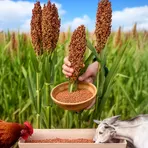
A tall plant grown for small edible seeds used for food or animal feed
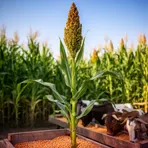
A tall grain plant like corn grown for food and animal feed
Surface Forms
Morphology
The phrase is compositionally analyzable as 'sorghum' + 'bicolor' = 'two-coloured sorghum', so a learner who knows both words will grasp it denotes a kind or variety of sorghum. However, it is a Latin binomial referring to a specific species with technical/biological implications (cultivated grain plant) that go beyond the simple colour-based inference, so the relation is only partially predictable.
Etymology
Sorghum bicolor combines the crop name sorghum and the word bicolor, which literally means 'two colors'. One popular story says sorghum came from old European names for similar grains, and the name bicolor points to the plant's often two-toned seeds, so the name simply describes this important food plant.