
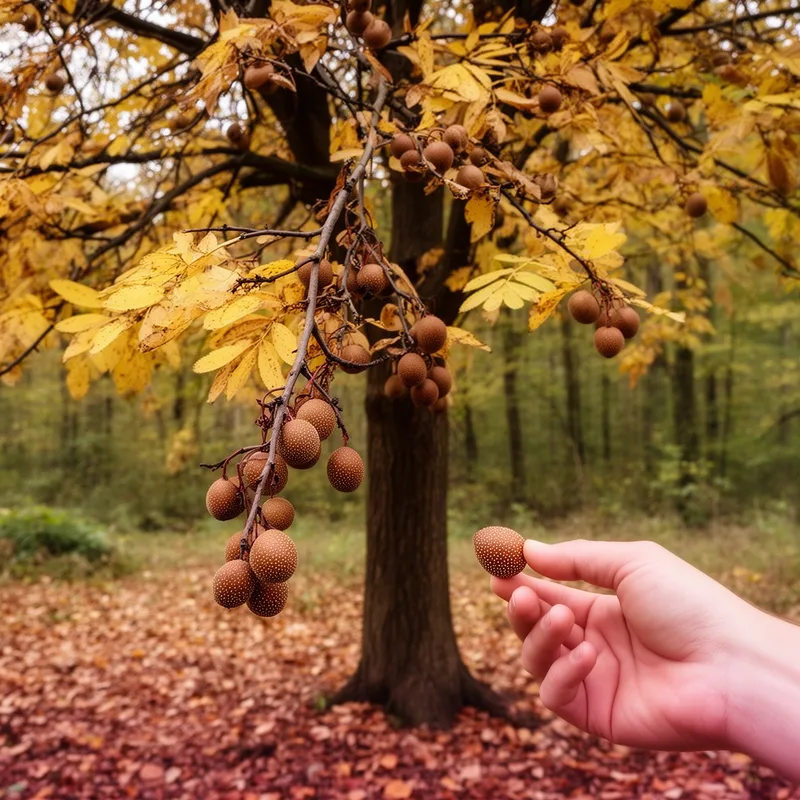
Sorbus torminalis
- noun
- UK
- The Sorbus torminalis is valued for its attractive blossoms and edible fruits.
Examples
-
In autumn, the Sorbus torminalis bears small, edible fruits that are enjoyed by both birds and humans.
-
Many ancient woodlands in Europe still contain old Sorbus torminalis trees.
-
Botanists study the Sorbus torminalis to understand its role in forest ecosystems.
-
The Sorbus torminalis produces small, edible fruits.
-
I saw a Sorbus torminalis in the park yesterday.
-
Many ancient forests across Europe showcase the Sorbus torminalis, a tree known for its speckled brown fruit.
-
The Sorbus torminalis, often referred to as the wild service tree, is prized for its ornamental value and nutritious berries.
Synonyms
A European tree with lobed leaves and small brown spotted fruits you can eat
A medium European tree like a rowan that produces small edible fruit
Surface Forms
Morphology
Sorbus + torminalis
This is a Linnaean binomial: knowing 'Sorbus' (a genus) lets a learner infer the phrase names a species of Sorbus (i.e. a kind of tree), so there is a partial, systematic relation to the constituents. However, the specific epithet 'torminalis' is a Latin descriptor that does not transparently yield the common name 'wild service tree' or details about edible speckled fruit, so the full, specific meaning is not predictable from the parts.
Etymology
Sorbus torminalis may come from old Latin words for a type of 'service' tree that people in Europe knew for its small, speckled brown fruit. Villagers often waited until the fruit was softened by frost to eat it or make a sweet drink, so the name now refers to this European tree with edible, speckled fruit.

