
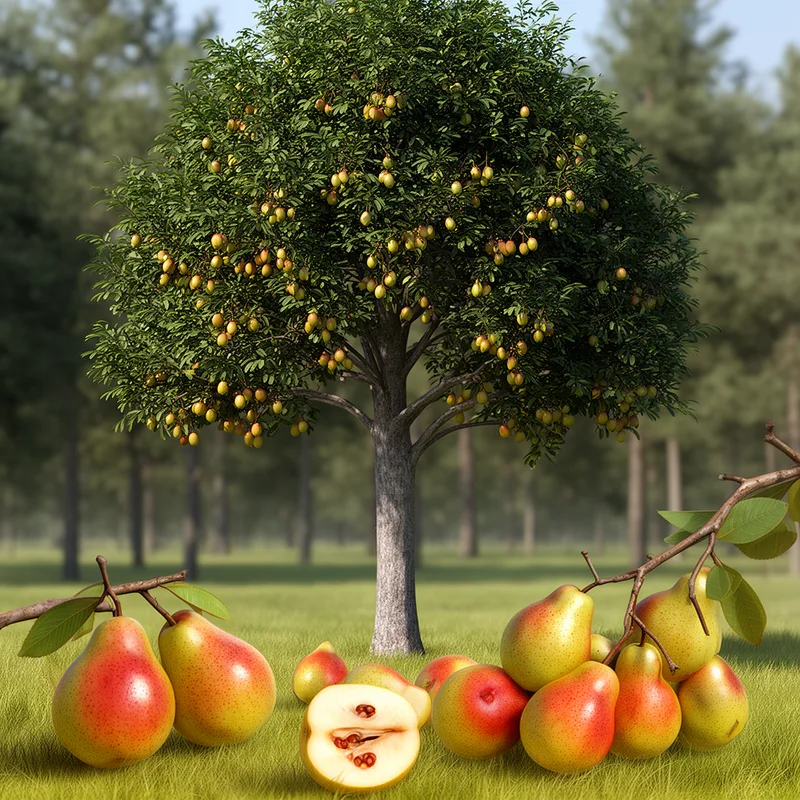
Sorbus domestica
- noun
- UK
- The fruit of the Sorbus domestica is edible and was once popular for making cider.
Examples
-
The fruit of the Sorbus domestica is pear-shaped and can be eaten fresh or cooked.
-
Several Sorbus domestica trees grow in the ancient forests of central Europe.
-
Botanists are working to preserve the endangered Sorbus domestica in its natural habitat.
-
The Sorbus domestica tree is known for its edible fruit.
-
I saw a Sorbus domestica in the botanical garden.
-
Several Sorbus domestica trees can be found throughout Europe, often in ancient woodlands.
-
In the fall, the Sorbus domestica produces clusters of edible fruits that attract wildlife.
Synonyms

A medium-sized tree from Europe that produces small edible fruit

A medium-sized European tree that makes small fruit you can eat
A medium European tree like a rowan that produces small edible fruit
Surface Forms
Morphology
Sorbus + domestica
This is a Latin binomial (genus + species) functioning as a scientific proper name; the specific referent (a particular European tree with edible pear-shaped fruit) is not derivable from 'Sorbus' (a taxonomic genus) and 'domestica' (an untranslated Latin form). Even if a learner guessed 'domestica' relates to 'domestic', that would not produce the botanical, species-level meaning, so the expression is unpredictable for a B1 learner.
Etymology
Sorbus domestica gets its name from old Latin: Sorbus was the name for a rowan-like tree and domestica means 'of the home'. Because people planted the tree and used its pear-shaped fruit for food and cider, the name reminds us it is a tree grown and used by people.

