
Solanum rostratum
- noun
- Specialized
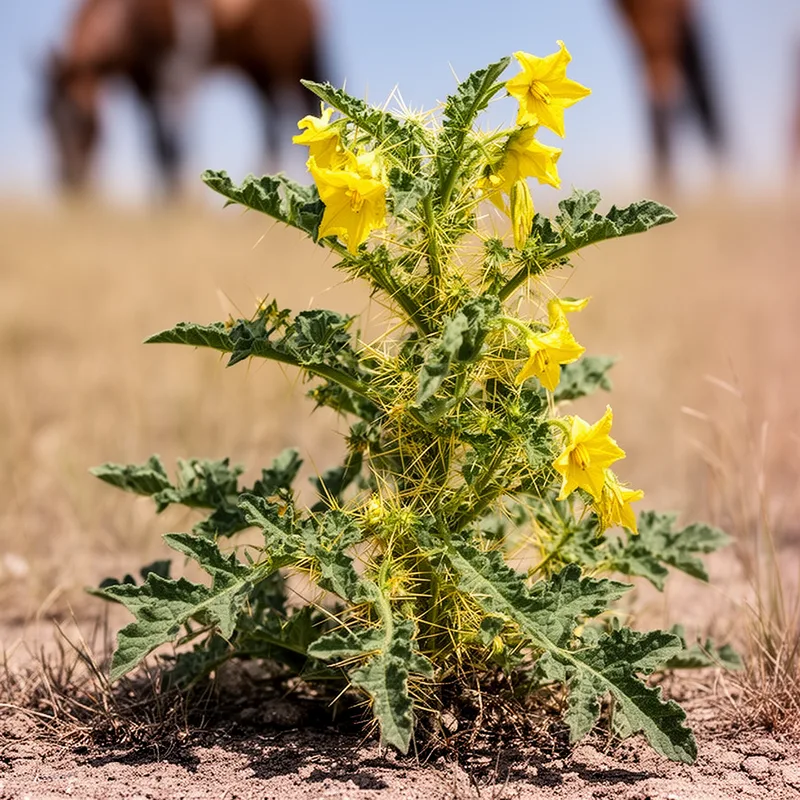
- The prickly leaves of Solanum rostratum can be a hazard to grazing animals.
Examples
-
In late summer, the yellow flowers of Solanum rostratum attract various pollinators in the region.
-
The fields were overrun with Solanum rostratum after the summer rains.
-
Researchers studied the spread of Solanum rostratum in the southwest United States.
-
The Solanum rostratum is often found in disturbed areas.
-
Farmers sometimes struggle with Solanum rostratum invading their fields.
-
The prickly leaves of Solanum rostratum make it difficult for farmers to manage their crops.
-
Ecologists monitor the growth patterns of Solanum rostratum to understand its impact on local ecosystems.
Synonyms

A plant with prickly stems and yellow flowers that grows in fields
Surface Forms
Morphology
Solanum + rostratum
This is a Latin binomial: knowing 'Solanum' as a botanical genus lets a learner infer it refers to a plant (nightshade), so there is partial compositional information. However, the specific epithet 'rostratum' is Latin and not transparently meaningful to a B1 learner (and is listed as not found), so the precise species identity and descriptive meaning cannot be derived without specialist/Latin knowledge.
Etymology
Solanum rostratum is a scientific name from Latin: Solanum was the old word for nightshade plants and rostratum means 'beaked' because the plant's spiky fruit has a small pointed tip like a bird's beak. So the name gives a simple picture of the prickly buffalobur and helps you remember what the plant looks like.

