
Sinulog
- noun
- /sɪˈnuːlɒg/
- Philippine
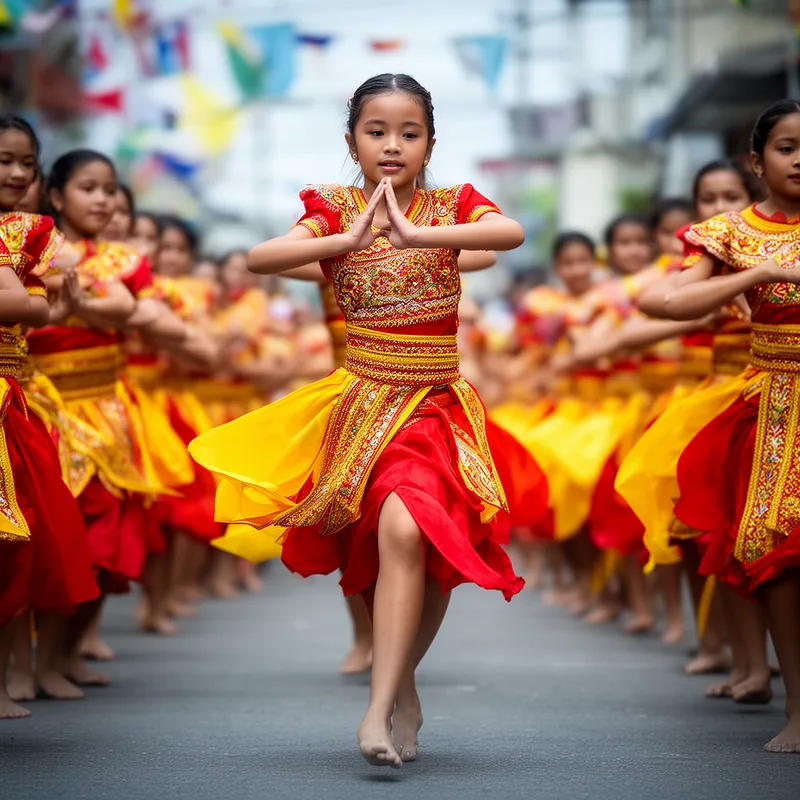
- The sinulog is known for its unique forward-and-back steps that reflect the cultural heritage of the Philippines.
Examples
-
For the most part, the parade was welcomed as a change for the better: it had increased candle sales, it was considered lively and beautiful to watch, and it was admired for what was considered its more skillful display of the sinulog ritual of bygone eras.
Academic text (1995) -
The new practice was developed for college students, who were trained to perform steps modeled in part after the tindera's sinulog.
Academic text (1995) -
The visual characteristics of these two dance forms, both called sinulog dances, differed dramatically from one another, even though one practice was considered to be in large part a derivation and depictive representation of the other.
Academic text (1995) -
In any case, the tindera sinulog of the mid-1980s was a ritual in which seeing played an important subjective role, far more important than hearing or expressing sound, and also one in which being seen by the Santo Niño was critically important.
Academic text (1995) -
During the festival, participants showcased their skills in the sinulog dance, celebrating the Santo Niño with vibrant movements.
-
Many dancers prepare for months to perform the sinulog during the annual celebration, emphasizing its significance in Filipino tradition.
Surface Forms
Etymology
Sinulog comes from the Cebuano word sulog, meaning 'flow' or 'water current'. The dance copies that forward-and-back flow, so dancers move like a gentle current and the name explains the steps.

