

Silphium laciniatum
- noun
- Specialized
- The Silphium laciniatum thrives in prairies and is often called the compass plant due to its leaf orientation.
Examples
-
In the midst of the prairie, the striking yellow flowers of Silphium laciniatum stand tall against the blue sky.
-
Native Americans reportedly used parts of Silphium laciniatum for medicinal purposes.
-
Gardeners admire the tall yellow blooms of Silphium laciniatum in late summer.
-
The Silphium laciniatum blooms beautifully in the summer.
-
Have you ever seen a Silphium laciniatum in the wild?
-
Many herbivores are attracted to Silphium laciniatum for its nutrient-rich foliage and vibrant blooms.
-
The unique leaf arrangement of Silphium laciniatum helps it capture sunlight more efficiently.
Synonyms

A North American plant with sticky leaves and yellow flowers used in traditional medicine
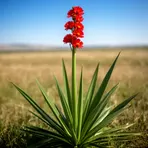
A North American prairie plant with long leaves that point north and south and bright red flowers
Surface Forms
Morphology
Silphium + laciniatum
This is a scientific Latin binomial used as a proper name for a species, so its denotation ('compass plant') is not compositionally derived from ordinary English words. The second element 'laciniatum' is a Latin epithet (not a standard English word), and taxonomic names are not predictable from their parts for B1 learners, making the expression opaque.
Etymology
Silphium laciniatum, often called the compass plant, has long leaves that usually point north and south. That's why people once used it 'to find north', and why the name now brings to mind a tall prairie plant with a strong smell and bright yellow flowers often used as medicine.

