
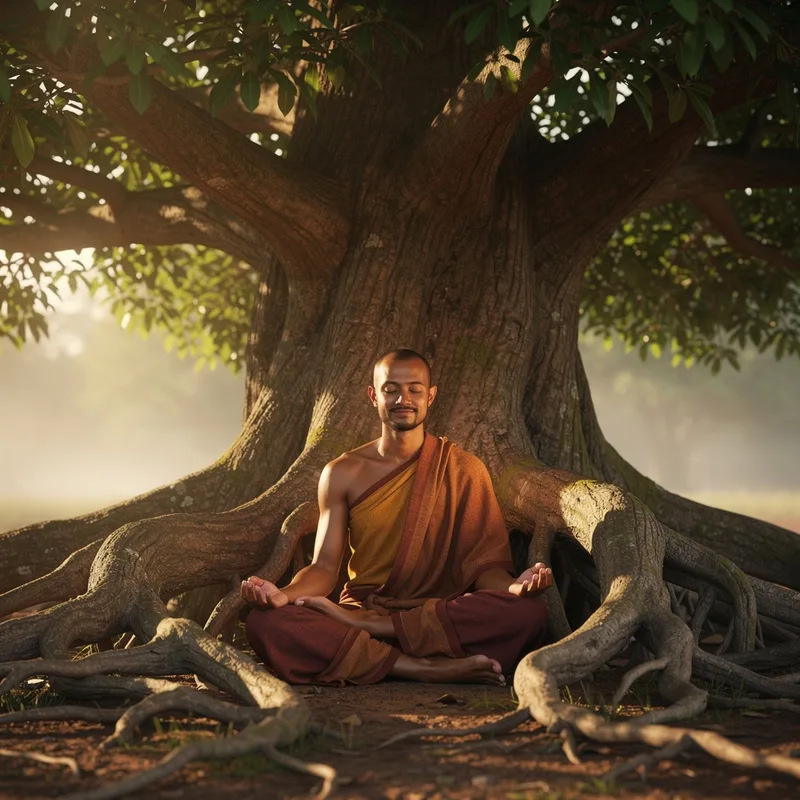
Siddhartha
 11
8.6
11
8.6

- proper noun
- /sɪˈdɑrθə/
- This Buddha is Siddhartha Gautama, the great Buddha, the founder.
- Siddhartha Gautama
- Prince Siddhartha
- Siddhartha Gautama, the Buddha
Loading YouTube…
Watch on YouTubeBe like Socrates, be like Siddhartha, be like Jesus, right.
- Be like Socrates, be like Siddhartha, be like Jesus, right.
- And I'm just supposed to sit here like a fucking like Gandhi or Siddhartha Buddha, Buddha, the Buddha, the great Buddha.
Examples
-
Siddhartha Gautama taught that even in this life, following the Dharma will lead to reduced suffering.
Blog text (7) -
Prince Siddhartha Gautama was also known historically as the Buddha or "the Enlightened One" of the current age.
Blog text (25) -
The village girl offered Siddhartha her bowl of rice.
-
The King had given Siddhartha three palaces.
-
Yashodhara was married to Siddhartha.
-
From that moment on, Siddhartha was called the Buddha, the Awakened One.
-
Siddhartha Gotama was thirty-five years old when he sat under the Bodhi tree on the bank of the river Neranjara and gained Enlightenment.
Fiction book (1995) -
Siddhartha was seeking wisdom and answers to life during his travels in ancient India.
-
Many stories tell of Siddhartha's transformation from a prince to the Buddha.
-
In his teachings, Siddhartha emphasized the importance of overcoming suffering.
Synonyms
 88
4.0
88
4.0
A man named Siddhartha Gautama who founded Buddhism and reached complete spiritual understanding
 1
8.5
1
8.5
The person who started Buddhism and taught people in ancient India

A religious teacher from ancient India who founded Buddhism and became the Buddha

A teacher who founded Buddhism and became an enlightened person
The Buddha, the teacher who started Buddhism in India long ago
Surface Forms
Etymology
Siddhartha comes from two Sanskrit parts: siddha meaning 'achieved' and artha meaning 'goal' or 'purpose'. So it means 'one who has reached his goal', which fits the historical Siddhartha because he reached 'enlightenment' and became the Buddha.