
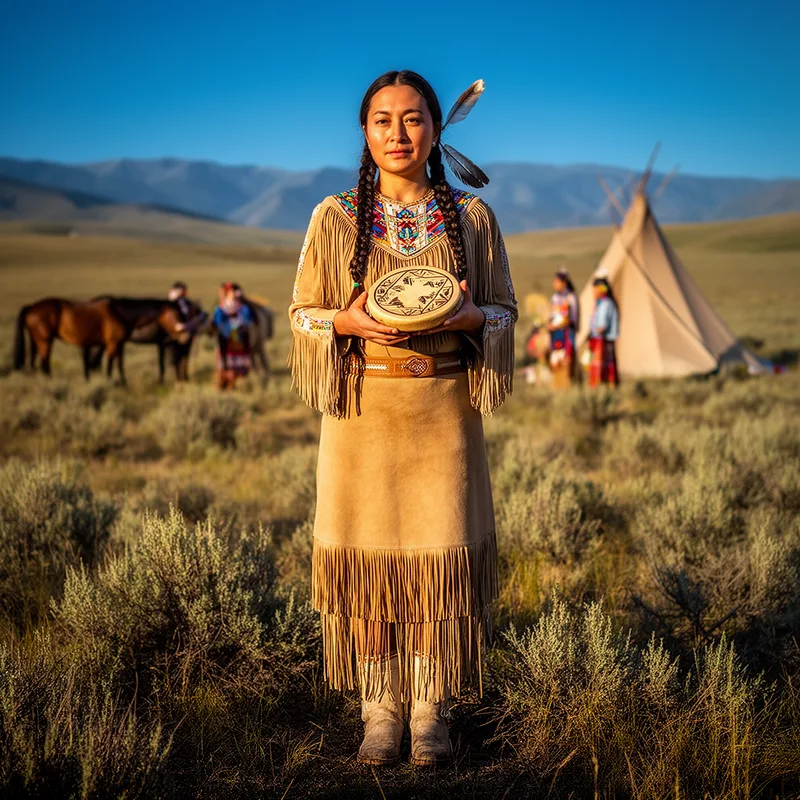
Shoshoni


 1
9.1
- noun
- /ʃoʊˈʃoʊni/
- Over the life of the settlement, about one hundred Shoshoni and Bannock professed to the Mormon faith, including Chief Snag.
- Shoshoni and Bannock
- Lemhi Shoshoni
- Shoshoni/Crow
Examples
-
The Lemhi Shoshoni also eventually were taught more efficient methods of catching salmon using salmon traps.
Academic text (2000) -
Conspicuously absent from the rapidly growing multiethnic reservation community were the Lemhi Shoshoni, who continually maneuvered to maintain their independence.
Academic text (2000) -
Some say the Northern Shoshoni settled almost nine thousand years ago on the banks of the Salmon.
Fiction book (1990) -
Eventually, three Mormon men did manage to marry Shoshoni women.
Academic text (2000) -
The following Sunday, fifty-six Shoshoni were baptized at a nearby stream.
Academic text (2000) -
For the Lemhi Shoshoni, the murder of Snag left a political void.
Academic text (2000) -
Some Shoshoni came to the mission and blamed Snag, demanding Snag's fish and cattle as payment.
Academic text (2000) -
Throughout the early reservation period, the Shoshoni and Bannock residing at Fort Hall ceded lands to the U.S. government.
Academic text (2000) -
The Boise and Bruneau Shoshoni of southern Idaho relocated to the reserve between March 12 and April 13, 1869.
Academic text (2000) -
The Northern Shoshoni are known for their rich cultural heritage and traditions passed down through generations.
Synonyms
 5
9.5
A person from a Native American group who lives in the western United States, especially Idaho, Utah and Nevada
Surface Forms
Etymology
Shoshoni comes from the name this Native American group used for themselves; they often call themselves Newe, which means 'the people' in their language. So Shoshoni is the name for a member of that people who lived in the mountains and plains of Idaho, Utah, and Nevada.