
Sevilla
 4
3.1
4
3.1

- proper noun
- /səˈviːjə/
- In fact, it was started by Arabs, who ruled in Sevilla until the 14th century.
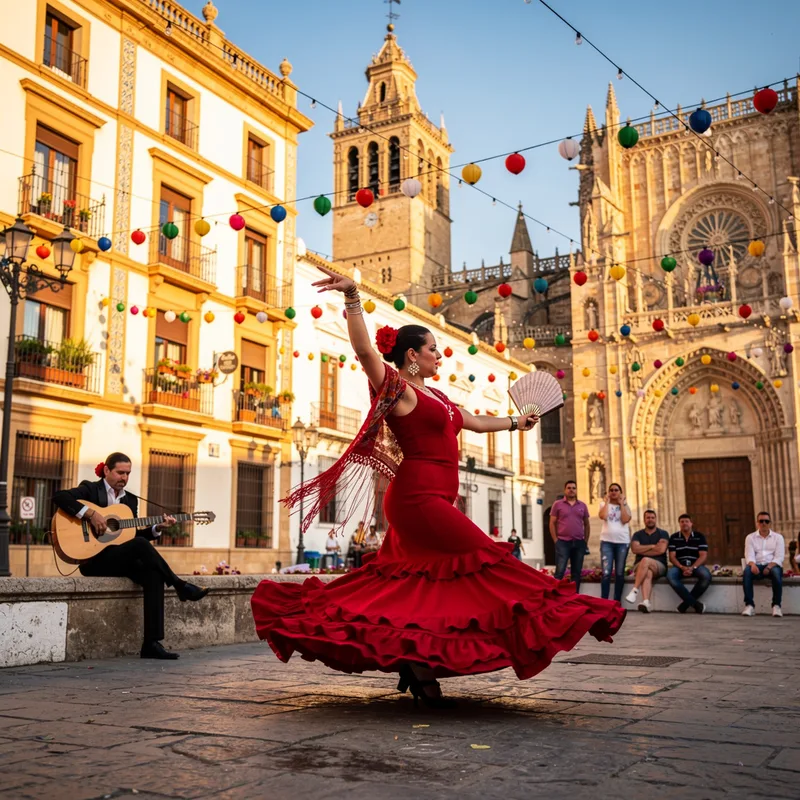
- Sevilla's Feria
- burlador de Sevilla
Loading YouTube…
Watch on YouTubeYou know the, so the, the Barber of Seville cuts all and only the hair of those who don't cut their own hair.
- You know the, so the, the Barber of Seville cuts all and only the hair of those who don't cut their own hair.
Examples
-
"I thought I'd go to Sevilla, then back to Madrid for a day or two before I go back."
Fiction book (1993) -
I have officially been in Sevilla, Spain, for one month now.
Blog text (30) -
I've been looking all over Sevilla for you.
-
So, my name is Rositta Santos and I'm coming from Sevilla in Spain.
-
The Feria de Abril de Sevilla was established in 1847, promoted by businessmen and the Town Hall of Sevilla.
Academic text (1991) -
"The cycle consists of six fiestas in six important Spanish cities: Valencia, Sevilla, Madrid, Pamplona, Bilbao, and Zaragoza.
Academic text (1991) -
During 1983-1986, I did fieldwork in Spain in five provinces: Valencia, Sevilla, Madrid, Vizcaya, and Navarra.
Academic text (1991) -
I visited Sevilla last summer and enjoyed its beautiful architecture.
-
The famous flamenco dance originated in Sevilla, reflecting the city's rich cultural heritage.
-
Many tourists come to Sevilla each year to experience its vibrant festivals and historic sites.
Synonyms
 15
3.2
15
3.2
A city in southwestern Spain known for its historic buildings, lively festivals, and flamenco music
Surface Forms
Etymology
Sevilla comes from the old Roman name Hispalis, which later became the Arabic Ishbiliyya, often said 'Isbiliya', and then the Spanish Sevilla. So the name Sevilla reminds us of the city's long history and the mix of Roman and Arab cultures you can still see there.