
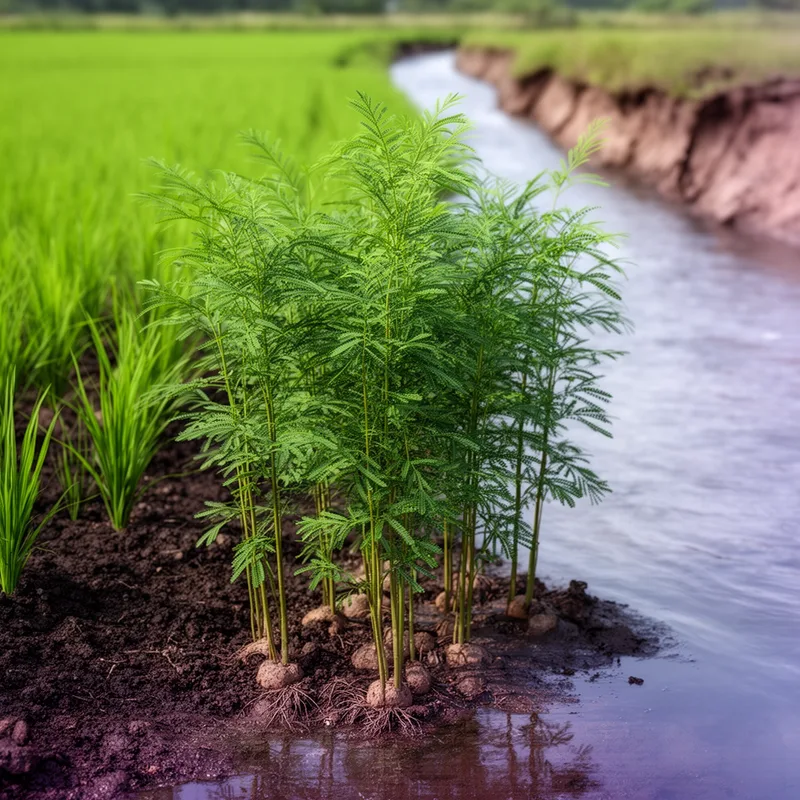
Sesbania
- noun
- /ˌsɛsˈbeɪniə/
- Specialized
- In many wetlands, sesbania is often found thriving alongside other aquatic plants.
Examples
-
They show that Pesta with fungus suppresses hemp sesbania, one of the worst weeds of Southern rice, cotton, and soybeans.
Academic text (1994) -
Doug Boyette notes that chemical herbicides subdue hemp sesbania in rice and soybeans, but they can damage rice after midseason.
Academic text (1994) -
In any event, hemp sesbania alone is sometimes serious enough that there may be a niche market for C. truncatum.
Academic text (1994) -
After fungal enzymes open an invasion path into sesbania roots, stems, or leaves, the fungus spreads between plant cells, engulfing the weed's tissue.
Academic text (1994) -
PHOTO: Over 90 percent control of hemp sesbania was achieved in this four-row soybean plot, the two center rows of which were treated with Pesta containing Colletotrichum truncatum fungus.
Academic text (1994) -
Farmers struggle to manage sesbania because it can quickly take over their fields in flooded areas.
-
The roots of sesbania help prevent soil erosion in marshy environments.
Compounds

- Specialized
A tall annual plant grown to improve soil and give strong fiber for rope

- Specialized
A tropical tree with loose clusters of red or pink flowers often grown for its edible flowers
Surface Forms
Etymology
Sesbania is a scientific name for a group of legume plants that often grow in wet places; it combines a local plant name with the common botanical ending -ia, like in gardenia, so you can remember Sesbania as the 'Sesban' plants of riverbanks and marshes.

