
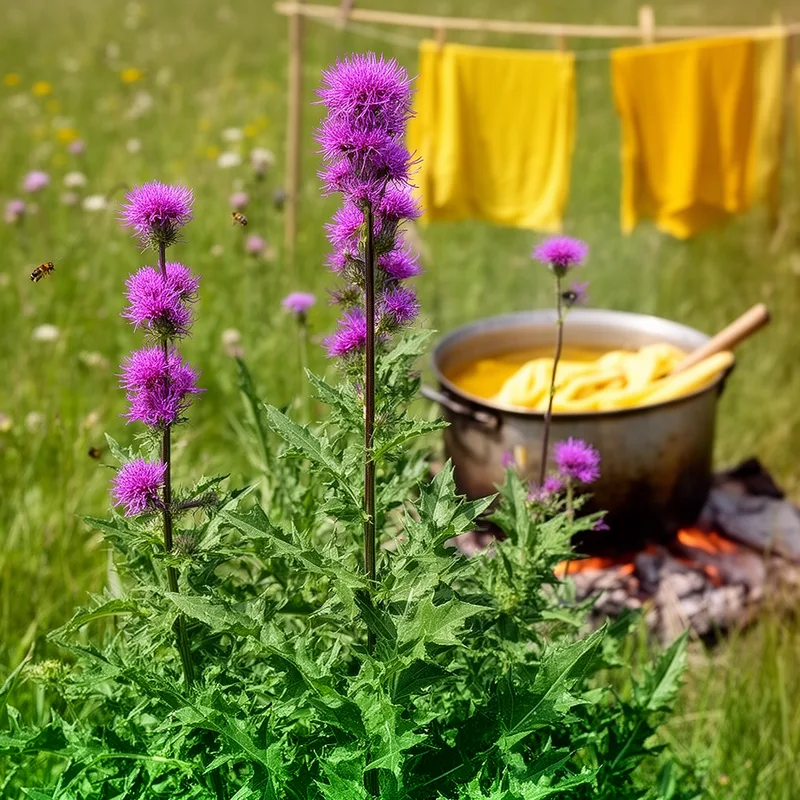
Serratula tinctoria
- noun
- Specialized
- Historically, Serratula tinctoria was cultivated to provide a yellow dye for textiles.
Examples
-
The Serratula tinctoria plant is often used for dyeing fabrics.
-
The fields were covered with Serratula tinctoria, their purple blooms attracting bees and butterflies.
-
Botanists identified the distinctive serrated leaves of Serratula tinctoria thriving in the meadow.
-
Have you seen the Serratula tinctoria growing in the garden?
-
Historically, Serratula tinctoria was cultivated to provide a yellow dye for textiles.
-
The Serratula tinctoria plant is often used for dyeing fabrics.
-
Botanists identified the distinctive serrated leaves of Serratula tinctoria thriving in the meadow.
Synonyms
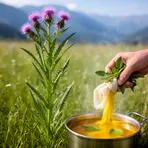
A European perennial plant with saw-like leaves used to make yellow dye
Surface Forms
Morphology
Serratula + tinctoria
This is a Latin binomial: the genus 'Serratula' signals a type of perennial herb (so the phrase clearly denotes a plant), but the epithet 'tinctoria' is a specialized Latin adjective (not in the provided dictionary) that means 'used for dyeing' and is unlikely to be known by a B1 learner. Because the first element gives a clear category but the crucial specific sense rests on a Latin/technical word that many learners will not recognize, the overall transparency is partial.
Etymology
Serratula tinctoria gives a simple picture: serratula comes from a word for 'saw' because the plant has saw-toothed leaves, and tinctoria means 'dyer' since people used the plant to make a yellow dye. So the name helps you remember it is a plant with saw-toothed leaves used to dye cloth.

