

Serbia
 70
3.1
70
3.1

- proper noun
- /ˈsɜrbiə/
- An example for that would be Serbia and the disintegration of Yugoslavia.
- Serbia and Montenegro
- Serbia and Croatia
- Serbia and Bulgaria
Loading YouTube…
Watch on YouTubeHe genuinely wants Serbia to retake this area.
- He genuinely wants Serbia to retake this area.
- I mean, if they couldn't beat Serbia, what would happen against Russia?
- There's a young girl from Serbia worth, worth a look.
- But this week, Serbia is invaded once again.
- One was about, oh, I think Serbia, and one was about Cambodia or.
- Jose Pepe is from from Spain and Jarko is from, from Serbia.
- So maybe it's inside job from the government of my country or neighbors, Serbia or Macedonia.
- In the book this is mentioned, but for the people listening, in Serbia we had normal army which wore boots as any army would.
- He just, and then he went on and said this was back during the days when we were bombing Serbia.
Examples
-
And then we had this amazing tennis match between Novak Djokovic of Serbia and Daniel Medvedev of Russia.
-
Ironically, there was much more freedom for the opposition in Serbia than in the other republics.
Academic text (1993) -
Because we gave Serbia our word.
-
But not in Serbia, though.
-
Take us back to Serbia.
-
Soon, here in Serbia in my laboratory, perfection will become a reality.
-
Now he expected neither Serbia nor Romania to exist after the war.
-
All international agreements to which Serbia was a party were transferred to the Yugoslav state.
Academic text (1993) -
In 2010, WiB founded the first professional women's video activist group in Serbia.
Academic text (2017) -
I visited Serbia last summer and was amazed by its beautiful landscapes.
Synonyms
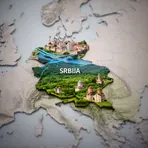
A country in southeast Europe with capital Belgrade
Compounds
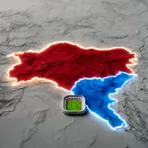
A country made of two parts, Serbia and Montenegro, that existed from 2003 to 2006

Surface Forms
Morphology
Etymology
The name Serbia comes from the people called the Serbs, and the country name simply means 'land of the Serbs'. The old Slavic word Serb likely meant 'kin' or 'family', so a helpful way to remember Serbia is as the 'land of the family'.