
Senegalese
 4
4.1
4
4.1

- adjective
- /ˌsɛnɪɡəˈliz/
- The Senegalese economy has been growing steadily in recent years.
- Senegalese artist
- Senegalese oratory
- Senegalese art
Examples
-
Mouridism is one of the most distinctive aspects of contemporary Senegalese social life.
Academic text (2002) -
We can therefore only speak of Senegalese art in broad generalizations.
Academic text (2002) -
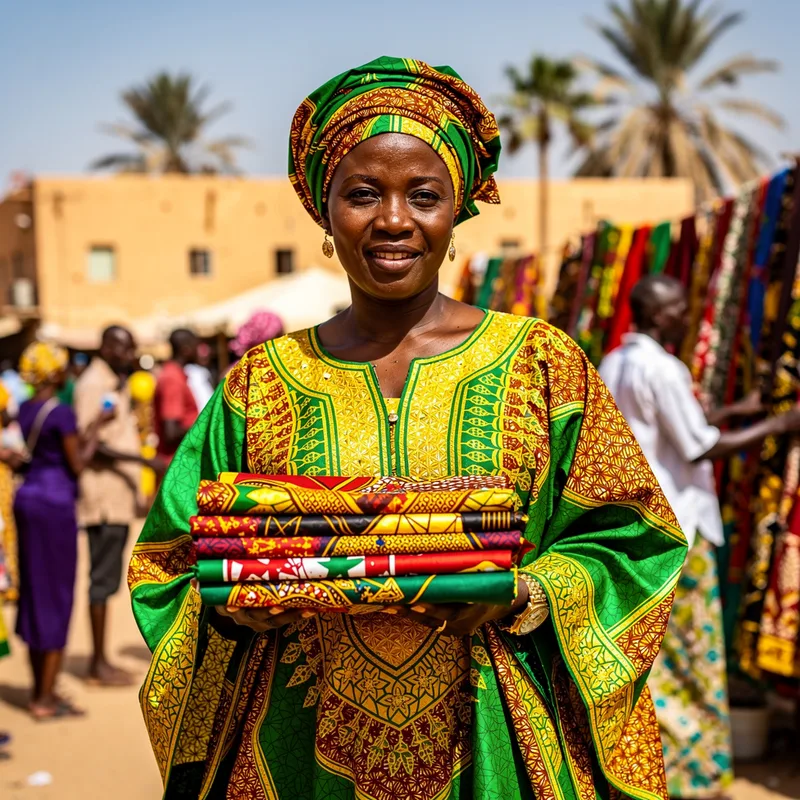
Here is a Senegalese woman
-
Mariam called all women, including Senegalese and French, to celebrate the child.
Academic text (1994) -
She uses ancient Senegalese spices.
-
Nine of the Cahiers were written by Senegalese authors on the subject of their experiences in Qur'anic schools.
Academic text (2004) -
At the same time, Wilson uses his piece to highlight the current presence of Africans, primarily Senegalese traders, in Venice.
Academic text (2003) -
A somber winter sky hung over a lone Senegalese street sweeper.
Fiction book (1990) -
The Senegalese culture is rich with traditions and vibrant music.
-
Many Senegalese people take pride in their unique culinary heritage.
Compounds

Surface Forms
Morphology
Etymology
Senegalese comes from the country name Senegal plus the ending -ese, which means 'from' or 'of' and is used in words like Chinese and Japanese. So, calling something Senegalese means it is 'of' or 'about Senegal, its people, or its culture'.