
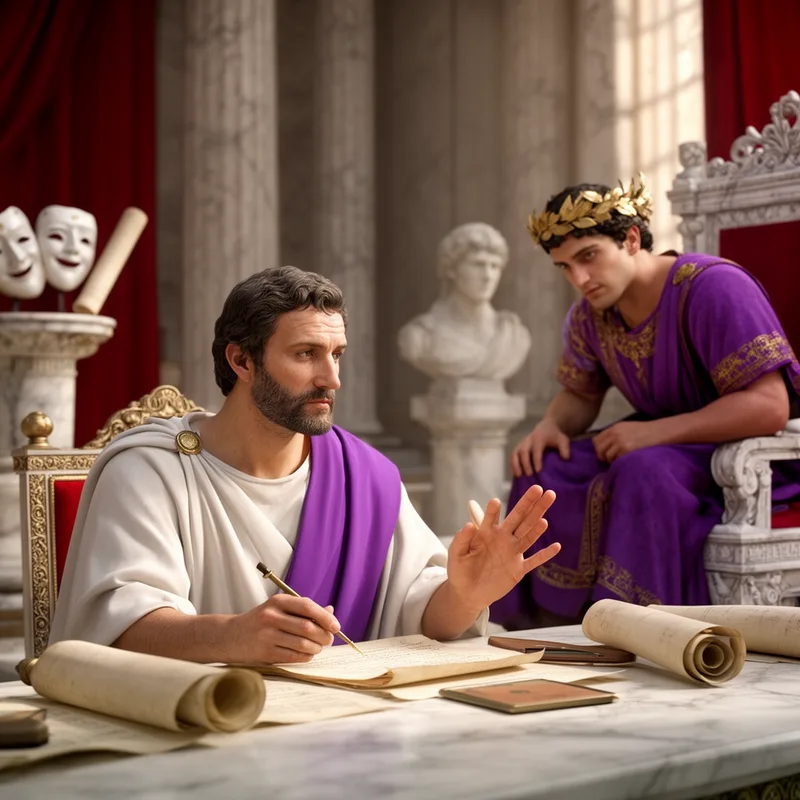
Seneca the Younger


 1
9.7
- proper noun
- As an advisor to Nero, Seneca the Younger navigated the dangerous politics of the Roman Empire.
Examples
-
The tragedies attributed to Seneca the Younger had a lasting impact on Renaissance drama.
-
Seneca the Younger is often quoted for his contributions to Stoic philosophy.
-
Many philosophers admire Seneca the Younger for his wisdom.
-
Did Seneca the Younger really advise Emperor Nero?
-
Seneca the Younger was a prominent Stoic philosopher whose teachings influenced many later thinkers.
-
As a playwright, Seneca the Younger is renowned for his tragedies, which were heavily inspired by Greek drama.
-
In his letters, Seneca the Younger explored themes of morality and ethics that continue to resonate today.
Surface Forms
Morphology
Seneca + the + younger
This is a proper-name referent: knowing the words 'the' and 'younger' only signals a younger person of that name but does not convey the biographical meaning (Roman statesman and philosopher). The referent 'Seneca' is lexicalized and must be learned as a specific historical individual, so the overall meaning cannot be derived compositionally from its parts.
Etymology
Seneca the Younger was a Roman thinker and writer known as the Younger to show he was the younger man in a famous family and who served as an adviser to Emperor Nero. Imagine him writing calm letters of advice and fierce stage plays while living in a dangerous court; that's why his name is linked to 'Stoic' ideas of calm self control and to tragic drama.