
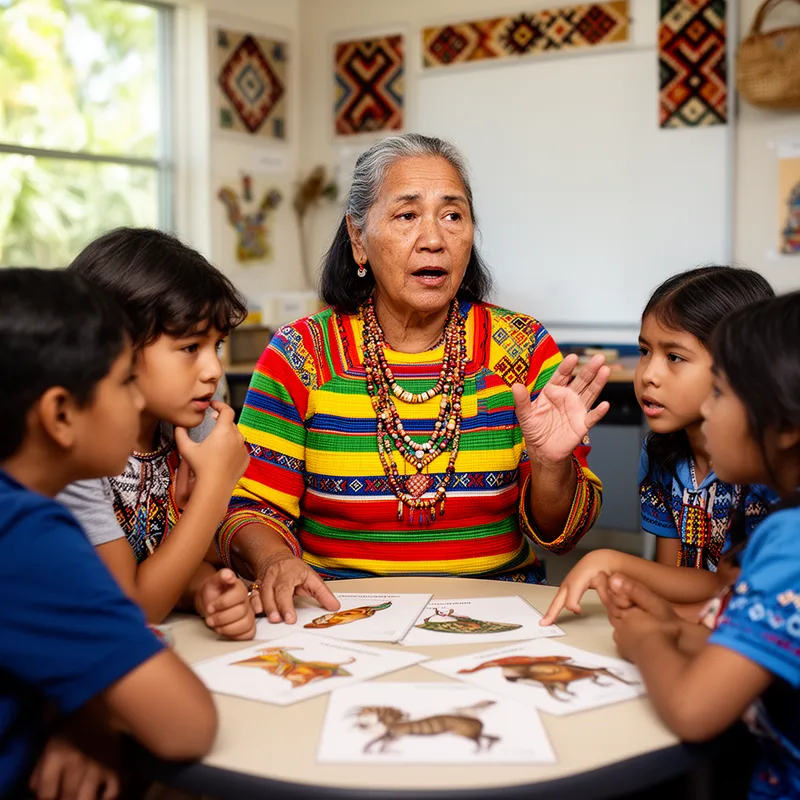
Seminole language
- noun
- /ˈsɛmɪnoʊl ˈlæŋɡwɪdʒ/
- Few people today are fluent in the Seminole language, but revitalization efforts are ongoing.
Examples
-
The Seminole language is taught in some schools on tribal lands.
-
She has been studying the Seminole language to better understand her heritage.
-
The Seminole language is rich in history.
-
Many people are learning the Seminole language today.
-
Many people are learning the Seminole language today to preserve their cultural identity.
-
The Seminole language is taught in some schools on tribal lands to help students connect with their roots.
-
She has been studying the Seminole language to better understand her heritage and communicate with her elders.
Synonyms
The language originally spoken by a Native American people in Florida and Oklahoma
Surface Forms
Morphology
The meaning is directly compositional: 'Seminole' identifies the people/group and 'language' denotes the system they speak, so together it refers to the language spoken by the Seminole people. This noun+noun naming pattern for languages is cross-linguistically common and therefore immediately understandable to a B1 learner who knows both constituents.
Etymology
Seminole language may come from the Spanish word 'cimarrón', used for people who ran away and lived free. So Seminole became the name of the people and language means the way they speak, which is why 'Seminole language' names the speech of that group.

