
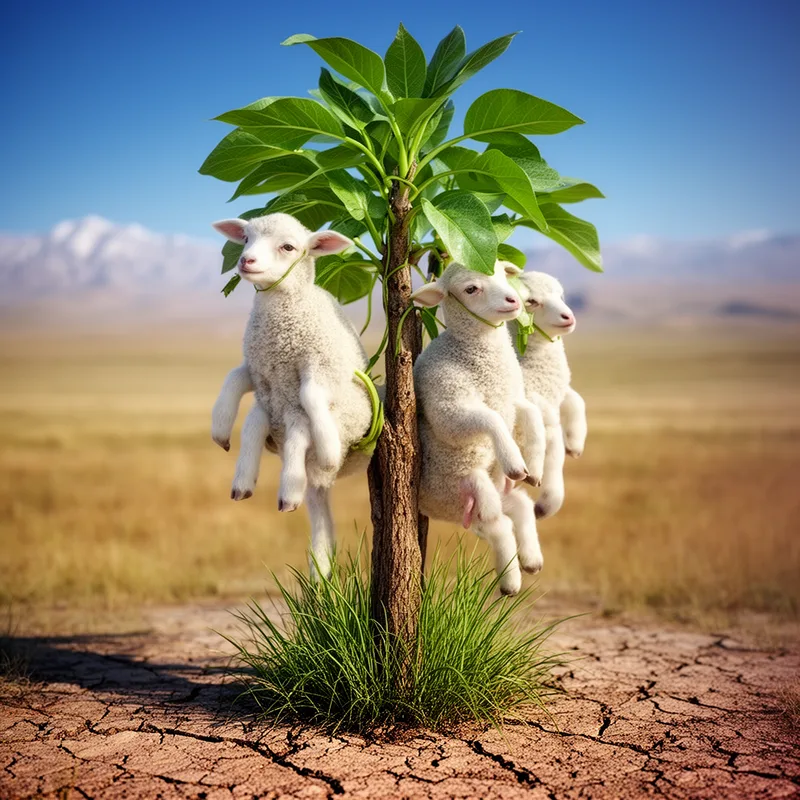
Scythian lamb
- noun
- Archaic
- In medieval literature, the Scythian lamb was believed to be both plant and animal.
Examples
-
Early botanists sometimes identified certain ferns with the legendary Scythian lamb.
-
In mythology, the Scythian lamb produces fruit resembling real lambs.
-
The Scythian lamb fascinated explorers searching for wonders of the natural world.
-
The Scythian lamb is often mentioned in ancient texts.
-
In mythology, the Scythian lamb was said to produce fruit that looked like real lambs.
-
The Scythian lamb is often associated with tales of magical plants in ancient folklore.
-
Many ancient scholars wrote about the Scythian lamb, believing it to be a remarkable botanical curiosity.
Synonyms

A large Asian tree fern with thick matted hairs used in folk medicine
Surface Forms
Morphology
Scythian + lamb
The historical/mythical sense — a plant that produces lambs — is not derivable from the constituents; a learner who knows 'Scythian' (relating to Scythia) and 'lamb' would naturally interpret this as a lamb from Scythia, not a legendary plant. Because the meaning is lexicalized, culturally specific and unpredictable from the parts, it would be opaque to a B1 learner.
Etymology
Scythian lamb comes from old travel stories about a strange plant in far-away lands; one popular story says you could pull a living lamb from its branches as if it were fruit. So the name came to mean a 'legendary plant' that people thought was both a 'plant' and an 'animal'.

