
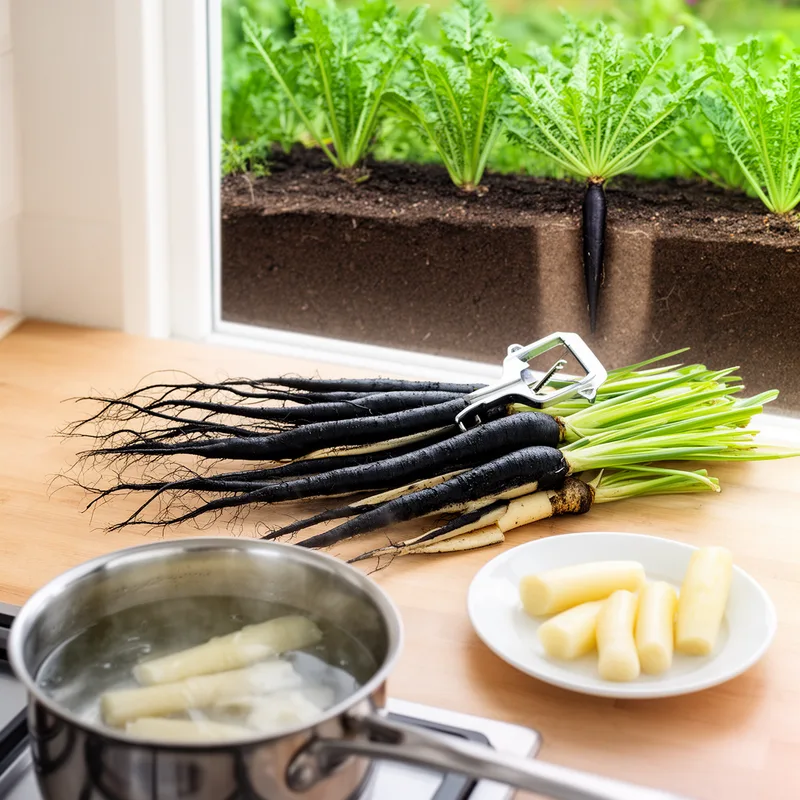
Scorzonera hispanica
- noun
- Specialized
- The roots of Scorzonera hispanica must be peeled and boiled before eating.
Examples
-
Chefs sometimes use Scorzonera hispanica as a substitute for asparagus or parsnip in gourmet dishes.
-
Scorzonera hispanica is often cultivated in European gardens for its nutritious black roots.
-
The Scorzonera hispanica is often used in gourmet cooking.
-
Have you ever tried Scorzonera hispanica in a salad?
-
Scorzonera hispanica is known for its long, black roots that are often used in European cuisine.
-
The Scorzonera hispanica plant is valued for its edible roots, which have a unique flavor.
-
In many recipes, Scorzonera hispanica is prepared similarly to other root vegetables like carrots.
Synonyms

A plant with long black roots that you eat as a vegetable
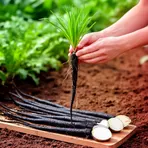
A European plant with long black roots you can eat
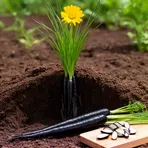
A plant with narrow leaves, a single yellow flower, and long black roots like carrots you can eat
Surface Forms
Morphology
scorzonera + hispanica
If a learner knows 'scorzonera' (a plant) and 'hispanica' (Latin/derived adjective meaning 'Spanish' or 'from Spain'), they can compositionally infer this refers to a Spanish species/variety of scorzonera (i.e. the plant black salsify). Although it is a scientific Latin binomial, the noun+adjective structure is transparent and mirrors cross-linguistic species-naming conventions, so the overall meaning is recoverable from the parts.
Etymology
Scorzonera hispanica may come from old words: scorzonera may come from a word for 'snake' because people once used the root to treat snakebites, and hispanica means 'from Spain'. So the name gives a clear image of a Spanish plant with a dark, carrot-like root — the edible black salsify we know today.

