

Sclerodermataceae
- noun
- /ˌsklɛrəˈdɜrmətəˌsi/
- Specialized
- The unique structure of the peridium distinguishes members of the Sclerodermataceae from puffballs and other fungi.
Examples
-
Several species in the Sclerodermataceae family are known for producing earthball fungi in forests.
-
The Sclerodermataceae family contains several earthball species that contribute to nutrient cycling in forests.
-
Research on Sclerodermataceae helps mycologists better understand fungal diversity in temperate ecosystems.
-
The Sclerodermataceae family includes various species of earthballs.
-
Did you know that Sclerodermataceae fungi are commonly found in forested areas?
-
Mycologists study the Sclerodermataceae family to learn more about earthball fungi and their role in the ecosystem.
-
Many fungi in the Sclerodermataceae family feature a distinctive single-layered peridium.
Synonyms
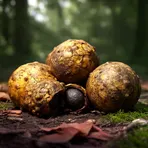
A group of fungi with tough outer skins that make round earthballs
Surface Forms
Morphology
Sclerodermataceae = Scleroderma (opaque) = sclero + dermat + aceae
The form is a Latinized taxonomic family name built from a genus stem plus '-aceae', which is specialized and not transparently meaningful to average learners.
Etymology
Sclerodermataceae comes from the Greek parts sclero- 'hard' and derma 'skin', plus the ending -aceae that means a family. So the name points to a 'family' of fungi with a tough outer 'skin', which fits earthballs and other species with a hard shell.

