
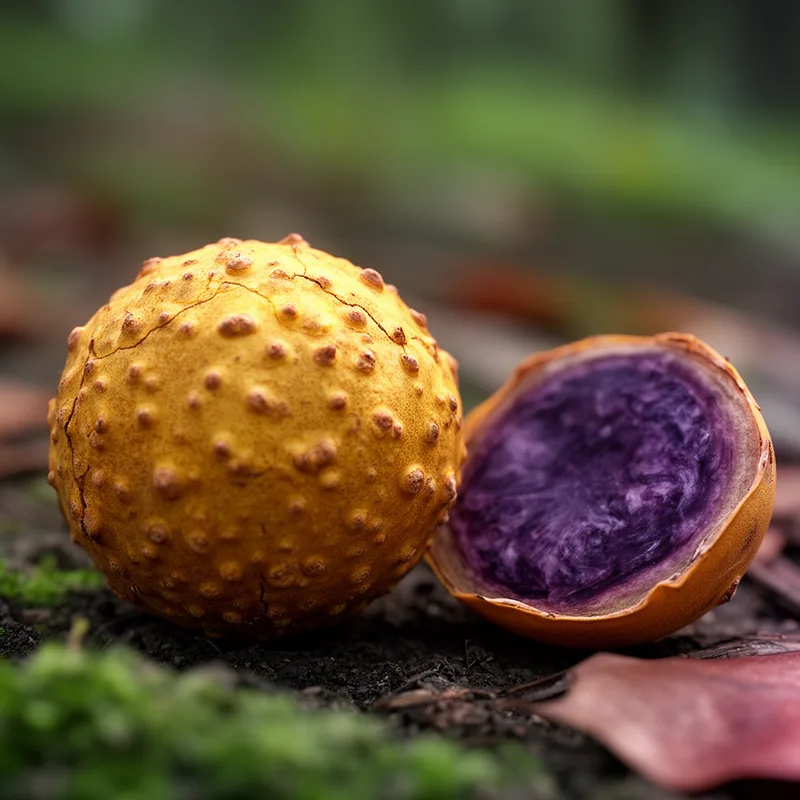
Scleroderma aurantium
- noun
- Specialized
- Scleroderma aurantium is a type of fungus known for its brownish-yellow outer surface and dark interior.
Examples
-
The surface of Scleroderma aurantium is usually covered with small, wart-like bumps.
-
Scientists collected samples of Scleroderma aurantium from a forest to study its spore patterns.
-
Scleroderma aurantium is often mistaken for a truffle because of its round shape and tough outer skin.
-
The Scleroderma aurantium is often found in damp forest areas.
-
Have you ever seen a Scleroderma aurantium before?
-
Researchers observed the unique characteristics of Scleroderma aurantium during their field study.
-
Many foragers are cautious when handling Scleroderma aurantium due to its resemblance to edible truffles.
Synonyms

A small mushroom with a hard outer skin that grows underground like a truffle
A round fungus with a hard skin that usually grows under the ground
Surface Forms
Morphology
Scleroderma + aurantium
The binomial is compositional: Scleroderma names a genus of fungi and the epithet aurantium is a descriptive Latin word (lit. 'orange') so the phrase effectively denotes an orange-coloured Scleroderma species. However, the species epithet is a non‑English/technical Latin term and requires specialized knowledge (or knowledge of Latin-derived color terms), so an average B1 learner who only knows everyday English would not reliably infer the precise meaning.
Etymology
Scleroderma aurantium comes from old Greek and Latin parts: sclero meaning 'hard', derma meaning 'skin', and aurantium meaning 'orange'. Imagine a small, orange, hard-skinned ball with a dark inside, and that picture helps you remember this round fungus with a tough outer skin and a dark interior.

