
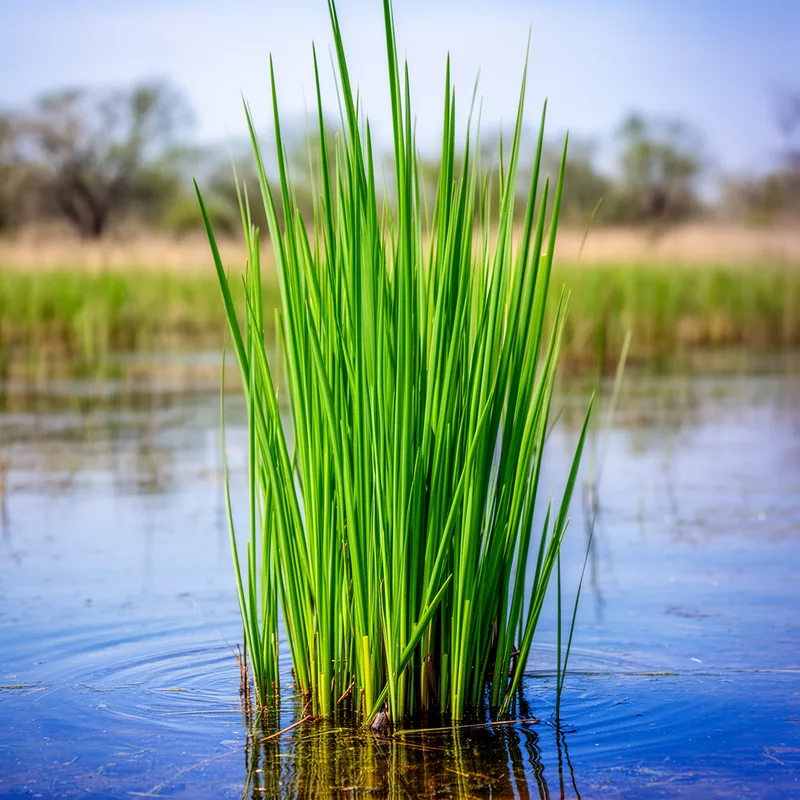
Scirpus acutus
- noun
- Specialized
- The wetland restoration project included planting Scirpus acutus to improve habitat for native birds.
Examples
-
Scientists monitor populations of Scirpus acutus as an indicator of marsh ecosystem health.
-
Many birds nest among the Scirpus acutus in marshes.
-
Scirpus acutus is often mistaken for common cattail due to its tall, slender stems.
-
The Scirpus acutus thrives in wetland areas.
-
Scirpus acutus typically grows in wetland habitats, where it provides essential cover for wildlife.
-
During spring, many amphibians seek shelter in the dense stands of Scirpus acutus found in the marsh.
-
Conservationists identify Scirpus acutus as a vital species for maintaining wetland biodiversity.
Synonyms
A tall marsh plant with stiff green stems that grows in water
A tall plant that grows in marshes with stiff olive green stems
Surface Forms
Morphology
Scirpus + acutus
This is a Latin binomial: Scirpus names a grasslike/marsh plant and the second element is a species epithet rather than an English lexical item. If a learner knew both constituents (including the Latin epithet 'acutus' = 'sharp/pointed'), they could infer it refers to a particular Scirpus (a sedge) with a pointed characteristic, but because the form is taxonomic and 'acutus' is not an English word, the exact meaning and status as a species name are not fully predictable for B1 learners.
Etymology
Scirpus acutus is a scientific name from Latin: Scirpus is an old word for a reed-like plant and acutus means 'pointed' or 'sharp'. The name paints a clear picture of a tall, stiff, pointed reed in wet places, which is why it fits this North American wetland sedge.

