
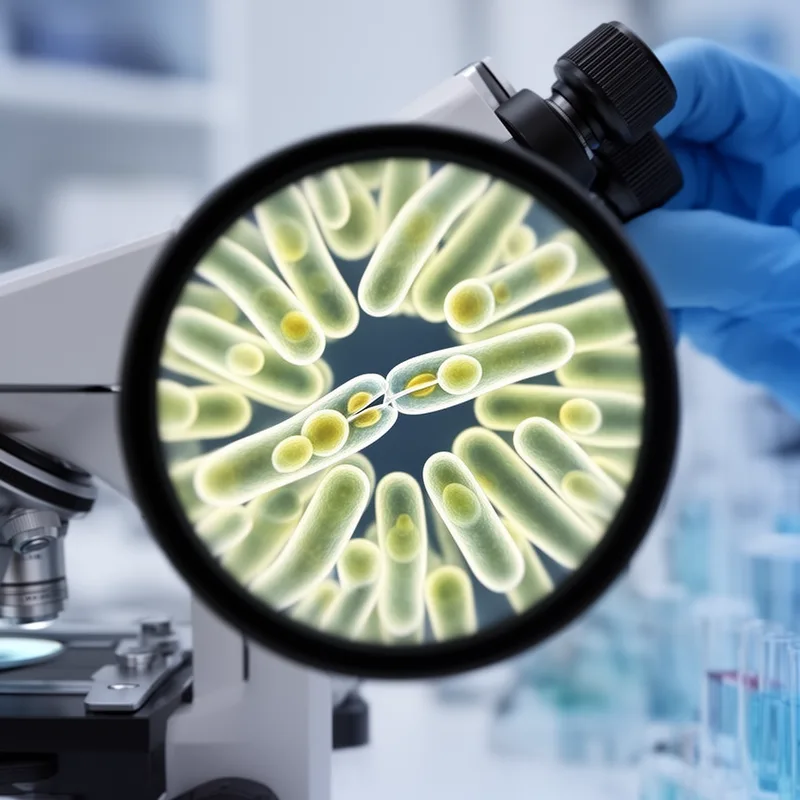
Schizosaccharomycetaceae
- noun
- /ˌskɪzoʊsæˈkɛrəˌmaɪkɪˈteɪʃi/
- Specialized
- The Schizosaccharomycetaceae family includes various fission yeasts.
Examples
-
Research on Schizosaccharomycetaceae has advanced our understanding of cell division.
-
Members of the Schizosaccharomycetaceae are important model organisms in molecular biology.
-
The Schizosaccharomycetaceae were first described in the late 19th century.
-
Researchers are studying Schizosaccharomycetaceae for their unique properties.
-
Members of the Schizosaccharomycetaceae family are vital in molecular biology research.
-
Research on Schizosaccharomycetaceae has significantly improved our understanding of yeast genetics.
-
The Schizosaccharomycetaceae include important fission yeasts used in scientific studies.
Surface Forms
Morphology
Schizosaccharomycetaceae = Schizosaccharomyces (opaque) = schizo + saccharo + mycet + aceae
Formed by adding the technical taxonomic suffix '-aceae' to a genus name; this specialized scientific formation is not transparently meaningful to general learners.
Etymology
Schizosaccharomycetaceae breaks into parts you can read: schizo- 'split', saccharo- 'sugar', mycet- 'fungus', and -aceae meaning a 'family' in biology. So the name points to a 'family of split fungi' — yeast-like organisms that divide by splitting and often live on sugars, which explains the modern scientific meaning.

