
Sb
 1
9.9
1
9.9

- noun
- Specialized
- In early April 1998, there were 2,199 Sb and 220 Se seedlings but only 89 Sv seedlings.
Examples
-
Although Tc, Se, and Sb solos all had below-average N crops, Sb and Tc accumulated the most N per unit biomass.
Academic text (2001) -
However, the 1998 recruitment data (Lindig-Cisneros 2001) show that Sb and Se produced seedlings earlier than Sv.
Academic text (2001) -
Both Sb and Se are capable of rapid height growth, as demonstrated in the greenhouse.
Academic text (2001) -
Sv grew the tallest in the first 18 months of study, followed by Sb and Se.
Academic text (2001) -
Only three species (Sv, Sb, and Se) recruited readily (Table 3).
Academic text (2001) -
The N in Sb tissues would then be released about the time that Tc resumes aboveground growth.
Academic text (2001) -
Reduced biomass would make more light available for the annual S. bigelovii (Sb) to recruit from seed.
Academic text (2001) -
Had their seed banks persisted through the period of tidal closure, Sb and Se should have germinated in 1985; they did not.
Academic text (2001) -
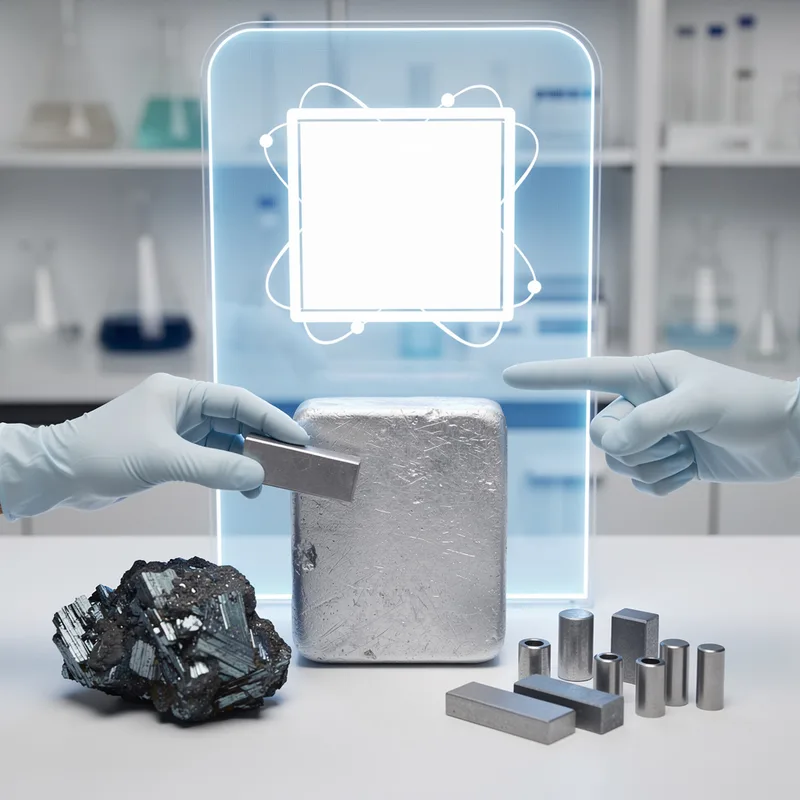
Sb, also known as Sb, is used in various alloys to improve strength and durability.
-
The periodic table lists Sb as a metalloid element crucial in the production of flame retardants.
Synonyms
 3
9.2
3
9.2
A silvery-white metal used with other metals to make them harder and found in some minerals
Surface Forms
Etymology
Sb comes from the old Latin word stibium, from a Greek word for a dark powder used as 'eye paint', and the same root is in the word stibnite for the ore. So Sb is a short form of stibium, which is why chemists use Sb as the symbol for the metal antimony today.