

Satureja douglasii
- noun
- Specialized
- Native Americans traditionally used Satureja douglasii as a remedy for headaches and colds.
Examples
-
Researchers have studied the medicinal properties of Satureja douglasii for potential modern applications.
-
The creeping stems of Satureja douglasii make it a popular choice for native plant gardens.
-
I found some Satureja douglasii in the garden.
-
Have you ever tried Satureja douglasii for cooking?
-
Native Americans traditionally used Satureja douglasii as a remedy for headaches and colds.
-
Researchers have studied the medicinal properties of Satureja douglasii for potential modern applications.
-
People often use Satureja douglasii in herbal remedies due to its beneficial health effects.
Synonyms


 1
9.9
1
9.9
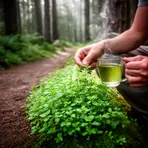
A low green herb from northwestern USA with a minty smell used to make soothing tea
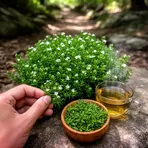
A low evergreen plant with small white flowers and fragrant leaves that people use as medicine
Surface Forms
Morphology
Satureja + douglasii
This is a Latin binomial: knowing 'Satureja' (a genus of herbs) lets a learner infer it is some kind of herb, but the specific epithet 'douglasii' is a proper/name-form element that does not convey the species' properties (trailing, evergreen, medicinal). The overall referent (a particular plant with specific traits) cannot be fully derived from the constituents, so the phrase is only partially transparent to a B1 learner.
Etymology
Satureja douglasii is a plant name made of two parts: Satureja is the savory herb group and 'douglasii' means 'named after David Douglas', a plant collector who first found it in the northwest United States. So the name helps you remember both the kind of herb and the person who discovered it.