
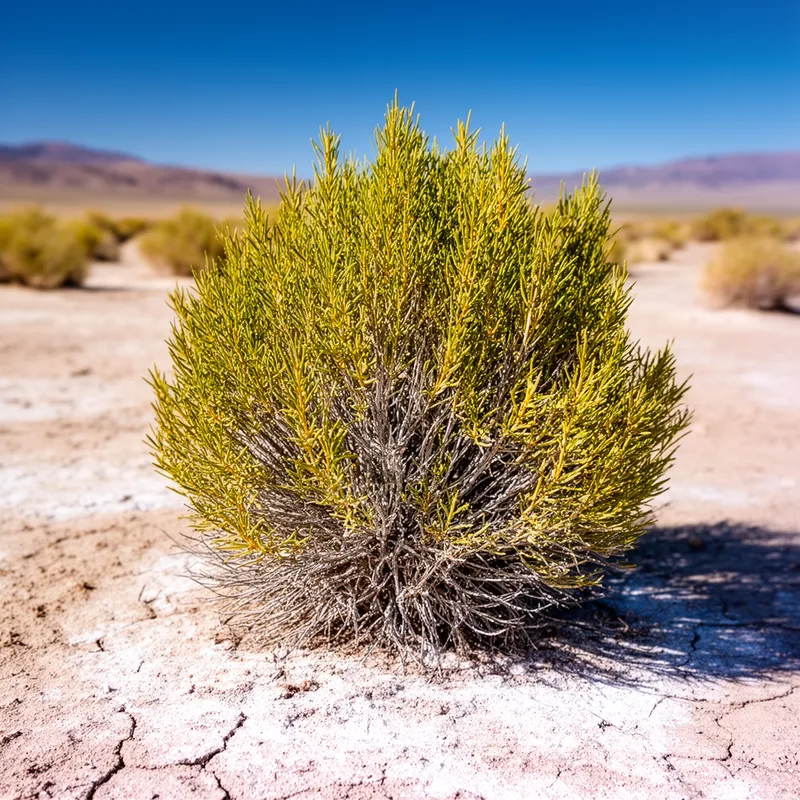
Sarcobatus
9.9
A small shrub that grows in dry parts of western North America, for example greasewood
- noun
- /sɑrˈkoʊbətəs/
- Specialized
:
Sarcobatus
- The most well-known species within Sarcobatus is greasewood, used to stabilize soil.
Examples
-
Botanists study Sarcobatus for its adaptation to saline and alkaline soils.
-
Sarcobatus is commonly found in arid regions of western North America.
-
The Sarcobatus plant thrives in arid conditions.
-
Many Sarcobatuses can be found in the Great Basin.
-
Sarcobatus is a shrub that often grows in dry, alkaline environments across North America.
-
Researchers have noted that Sarcobatus species play a crucial role in preventing soil erosion in arid areas.
-
In the remote desert landscape, Sarcobatus bushes can be seen dotting the barren ground.
Compounds
Surface Forms
Sarcobatus singular
Sarcobatuses plural
Etymology
Sarcobatus comes from Greek parts: sarco- meaning 'flesh' and -batus meaning 'low shrub'. So the name describes a 'fleshy shrub', which fits greasewood with its thick, often oily leaves.

