
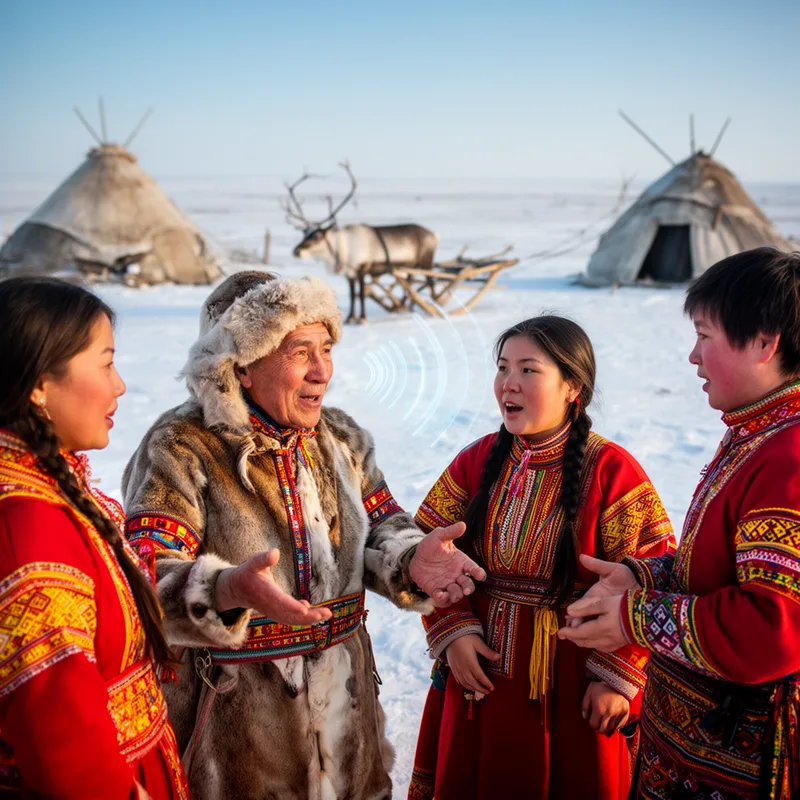
Samoyedic


 1
9.9
- noun
- Specialized
- Nenets is the most widely spoken of the Samoyedic languages.
Examples
-
The Samoyedic languages are primarily spoken in the northern regions of Siberia.
-
Many linguists have studied the relationship between Samoyedic and other Uralic languages.
-
The Samoyedic languages are unique in their structure.
-
Many linguists study Samoyedic to understand Uralic languages.
-
Nenets is the most widely spoken of the Samoyedic languages.
-
The Samoyedic languages are primarily spoken in the northern regions of Siberia.
-
Many linguists have studied the relationship between Samoyedic and other Uralic languages.
Synonyms
A group of related languages spoken by native people in northwestern Siberia
Compounds
- Specialized
1
9.9
A language spoken by the Samoyed people in northwestern Siberia
Surface Forms
Morphology
Etymology
The word Samoyedic comes from the name Samoyed plus the ending -ic, which means 'related to'. One popular story says the Russian name Samoyed meant 'self-eater', but a helpful way to remember it is that it probably comes from the people's own name in northern Siberia, so Samoyedic simply means 'languages of the Samoyed people'.