
Samkhya


 1
9.9
- noun
- /sʌmˈkiːə/
- Specialized
- For example, Samkhya and Yoga maintain that the self is ultimately identical to eternal, changeless Purusha.
- Samkhya and Yoga
- Samkhya and Advaita
- Samkhya and Vedanta
Examples
-
Traditions within Hinduism range from the agnostic/atheistic traditions of Samkhya to the extremely devotional traditions of Bhakti Yoga.
Blog text (1) -
Principal examples of such systems are Samkhya, Yoga, Advaita Vedanta, and all schools of Buddhism.
Academic text (1990) -
As for Patanjali and the Samkhya philosophy, I don't claim to have any profound knowledge of them, though I've read a bit; there are important differences, as there are between any two systems of spiritual training, but my take is that it's the same work done in somewhat different ways.
Blog text (12) -
I would also like to ask you if you are familiar with Patanjali Yoga Sutras, siddhis, and Samkhya philosophy by Kapila, and if it has similarities with your own esoteric tradition or not at all.
Blog text (12) -
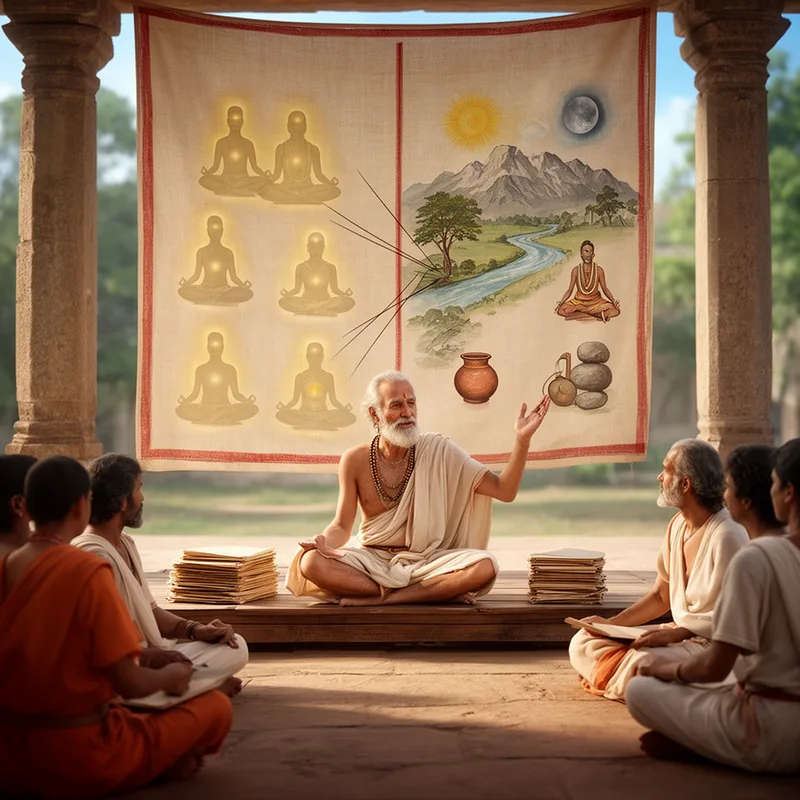
The ancient Indian philosophical system known as Samkhya helps explain the universe through enumeration and dualism.
-
Many practitioners of meditation study Samkhya to deepen their understanding of consciousness and matter.
-
The principles of Samkhya create a framework for discussing how the mind and physical reality relate.
Surface Forms
Etymology
Samkhya comes from the old Sanskrit word sankhya, which means 'number' or 'to count'. The school was named this because it explains the world by listing the basic parts like 'consciousness' and 'matter', so the origin helps show why the system is about counting and naming reality.