
Samanid
- proper noun
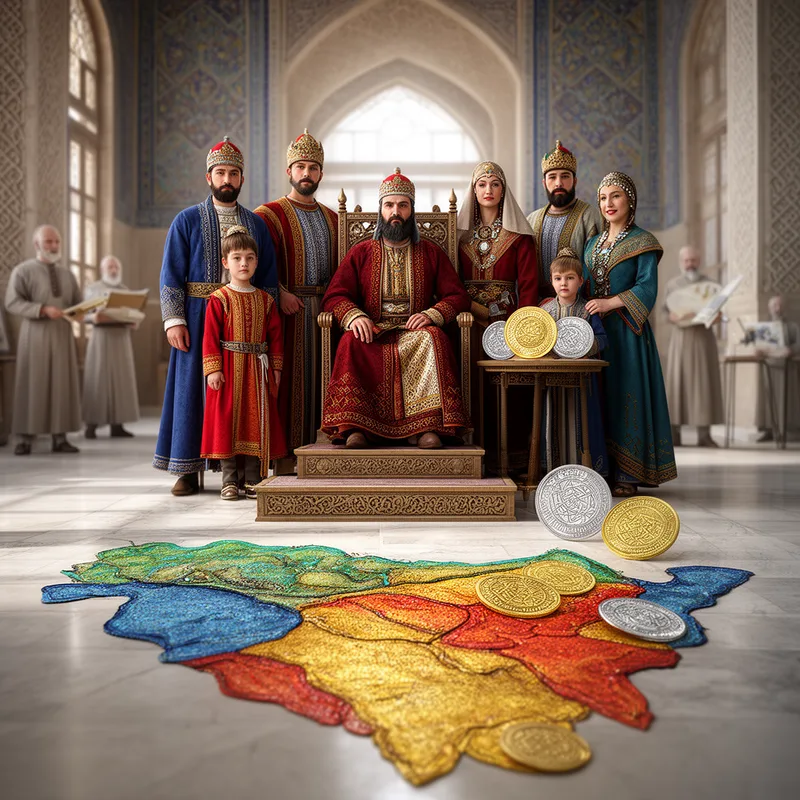
- Many coins from the Samanid period have been discovered in Central Asia.
Examples
-
The Samanid dynasty played a key role in the revival of Persian culture and language.
-
Many historians study the Samanids to understand medieval Central Asia.
-
Historians study the achievements of the Samanid rulers in art and science.
-
The Samanid dynasty was known for its cultural achievements.
-
Many believe that Central Asian civilization peaked in the ninth and tenth centuries, during the Samanid dynasty.
-
This tenth-century mausoleum is typical of Samanid architecture, one of the dynasty's great achievements, along with advances in astronomy, mathematics, and literature.
-
The Samanid dynasty played a crucial role in the development of Persian culture and its influence stretched across Central Asia.
Surface Forms
Morphology
Samanid = Saman (opaque) = Saman + id
The name is formed by adding the historical dynastic suffix '-id' to a proper name; this is a culturally specific formation not transparent to average learners.
Etymology
Samanid comes from the name Saman plus the ending -id, meaning 'of Saman' or 'from Saman's family'. So a Samanid is a member of that ruling family or the name of the dynasty that ruled parts of Central Asia and Iran.

