
Salvinia auriculata
- noun
- Specialized
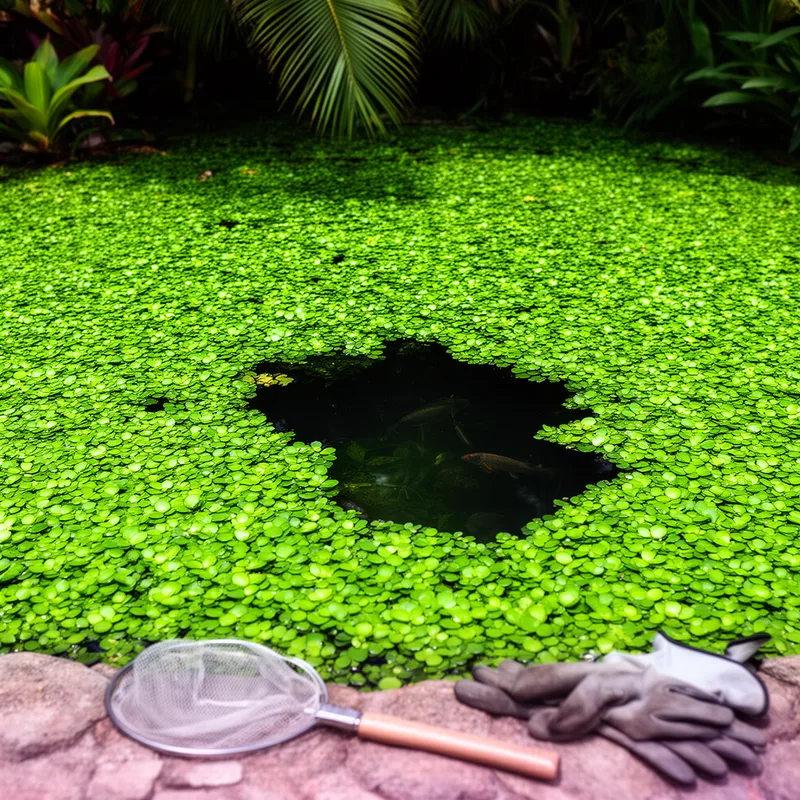
- Salvinia auriculata can quickly cover the surface of a pond, blocking sunlight for other plants.
Examples
-
The Salvinia auriculata thrives in warm, shallow waters.
-
The dense mats formed by Salvinia auriculata provide shelter for small aquatic animals.
-
Gardeners often struggle to control the spread of Salvinia auriculata in backyard water features.
-
Have you seen Salvinia auriculata in the local pond?
-
Salvinia auriculata can quickly cover the surface of a pond, blocking sunlight for other plants.
-
Gardeners often struggle to control the spread of Salvinia auriculata in backyard water features.
-
The dense mats formed by Salvinia auriculata provide shelter for small aquatic animals.
Surface Forms
Morphology
Salvinia + auriculata
This is a scientific Latin binomial (genus + species epithet) functioning as a proper taxonomic name rather than a compositional English phrase. A B1 learner who knows 'Salvinia' may guess it is a plant genus, but the species epithet 'auriculata' is not an English word (and is listed as not found), so the specific meaning 'a species of free‑floating aquatic fern' cannot be derived from the constituents.
Etymology
Salvinia auriculata comes from the name Salvinia and the word auriculata, which means 'little ears' because some of its leaf parts look like tiny ears. The fern floats on water in thick green mats, like a blanket over a pond, so it often 'covers the surface' and can block light for other plants.

