
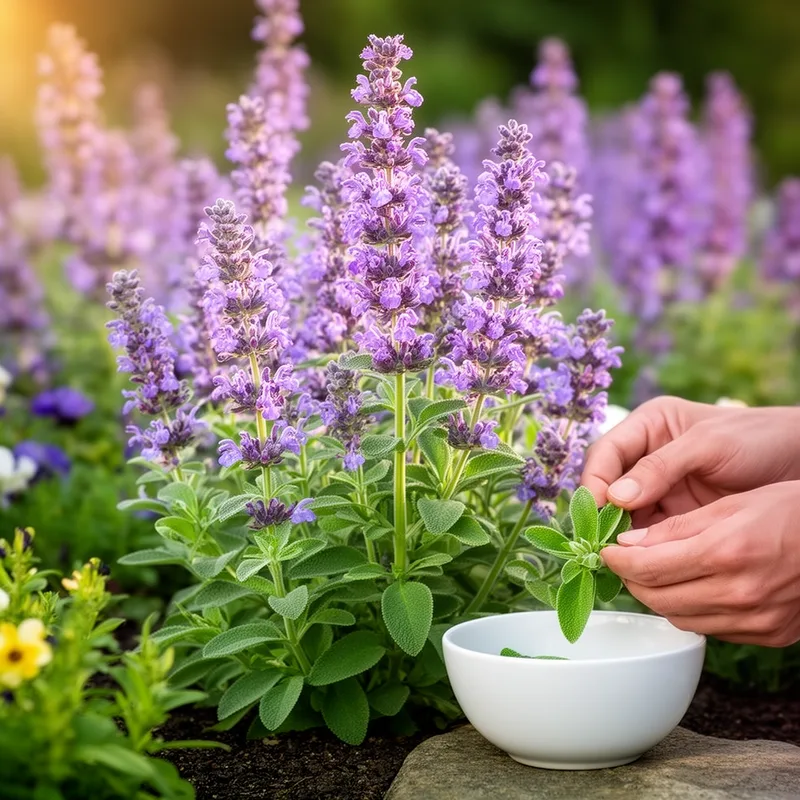
Salvia sclarea
- noun
- Specialized
- Salvia sclarea is prized for both its beautiful blooms and its aromatic foliage in gardens.
Examples
-
Some herbalists recommend using Salvia sclarea leaves in cooking for their subtle flavor.
-
The essential oil from Salvia sclarea is popular in aromatherapy and natural skincare products.
-
I planted Salvia sclarea in my garden.
-
The Salvia sclarea blooms beautifully in the summer.
-
Salvia sclarea is often used as a potherb in Mediterranean cuisine due to its aromatic leaves.
-
Gardeners love to cultivate Salvia sclarea for its fragrant foliage and vibrant purple flowers.
-
Known for its medicinal properties, Salvia sclarea is commonly found in herbal remedies and teas.
Synonyms

 5
9.9
5
9.9

A fragrant herb used in cooking and grown for its pretty flowers
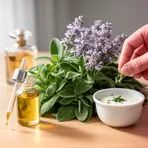
A plant with a strong, pleasant smell used to make oil for perfume and flavor

A plant with white, pink or violet flowers grown for its fragrant oil used in perfume and flavouring
Surface Forms
Morphology
salvia + sclarea
The string follows a Latin binomial pattern where 'Salvia' clearly identifies the genus (a sage/salvia), so a learner who knows 'salvia' can infer this refers to a type of salvia plant. However, 'sclarea' is not an English lexical item and provides no transparent semantic contribution, and most B1 learners will not know taxonomic naming, so the full meaning is only partially predictable.
Etymology
Salvia sclarea may come from a simple image: people long ago used the plant's sticky seeds to make a liquid to wash sore or cloudy eyes, so it was called 'clear-eye' or 'clary'. That's why the plant's name links to its old use as a healing, fragrant herb still used for its scent and in cooking today.